BMW has gone all out in the small capacity adventure bike space with the arrival of the F 450 GS.
We all have our guilty pleasures… and mine is adventure bikes. I’ve been lucky enough to clock some serious adventures over the years, with two particular highlights being the Canadian and Albanian finals of BMW’s international GS Trophy. It’s fair to say I’m on first name terms with the brand’s big GSs, and I’m a massive fan of what they have to offer, especially when the going gets rough and the terrain has you questioning your sanity. Funnily enough, I read a few comments questioning BMW’s sanity when news broke about the F 450 GS. The R1300GS and GSA are massive sellers for the brand, often topping the large capacity sales charts across many nations… especially in Europe. So, the idea of the German firm downsizing and diluting raised a few eyebrows, because the risk of getting it wrong could’ve proved devastating. On the flip-side, getting it right would offer the ultimate stepping stone into the GS family. For context, for those that don’t know, for several years now there has been a G 310 GS in the mix, which has done a decent job of offering an entry level GS, but it’s a far cry from its bigger brothers’ potential or focus. And whilst it’s sold in decent numbers, to the tune of tens of thousands, I don’t think many were left under any illusion that if BMW really went to town in this sector, the goods on offer would be a whole lot tastier… which is where the F 450 GS steps into the mix.
There’s no two ways about it, the 450 is aimed squarely at the A2 licence bracket and those that don’t want a gangly, weighty 1300 to nip to the chippy on. Building on their 310 endeavours, the new GS is a ground-up rethink of what an entry-level adventure bike can be. At its core, this is a 48hp, sub-180kg machine designed to do a bit of everything. Commuting, touring, green-laning… it’s all on the cards. But more importantly, it’s been built to feel like a “proper” GS, not a watered-down version.
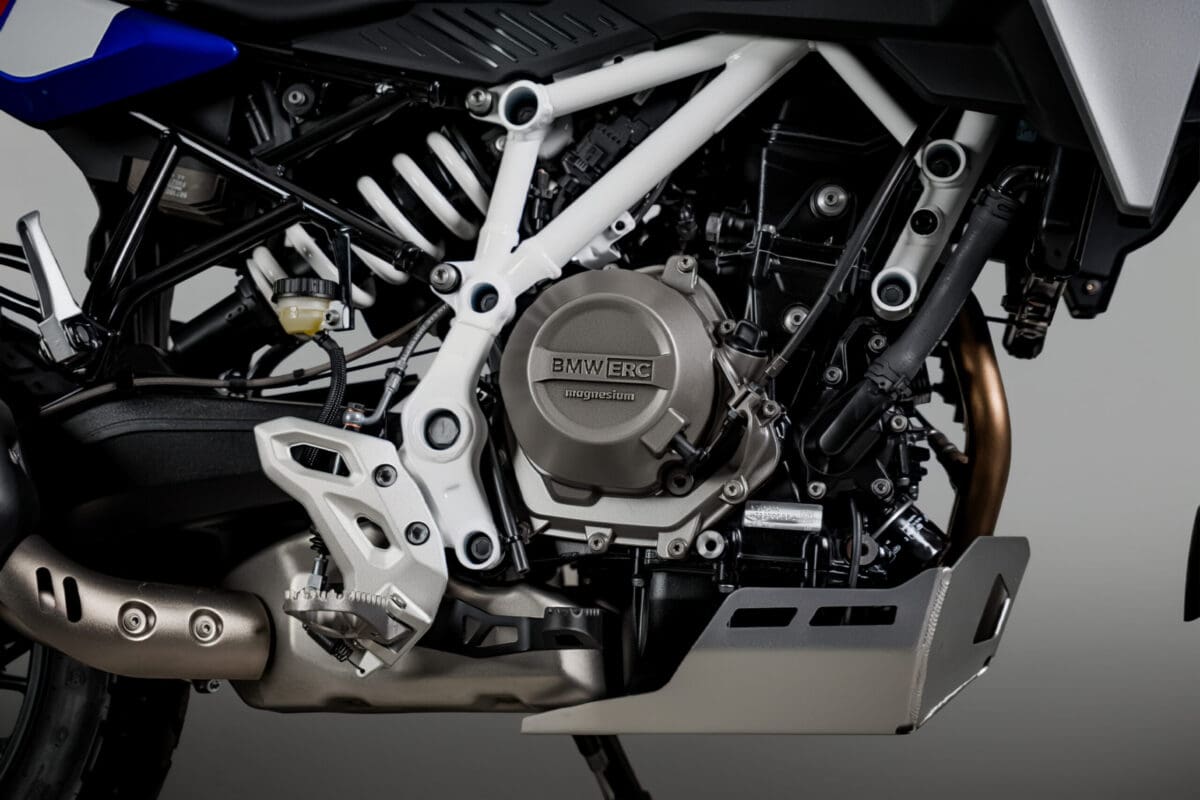
It’s powered by a wholly new 420cc parallel-twin, with a notable twist being its 135-degree crankpin offset… bucking the trend of a 270° firing order that’s become super common in twins these days. On its launch in Sicily, the lead engineer behind the bike told me the decision to go down the 135-route was down to the character and vibe-free nature of the setup, suggesting it also made the engine perform closer to a v-twin than a conventional parallel. With 43Nm of torque on tap and a strong low-to-midrange focus (80% of which is in your hand from 3,000rpm), it’s been designed for real-world riding rather than headline chasing figures. It’s also Euro5+ compliant, comes kitted with a balance shaft to minimise vibes further and, if you want to get the most from this motor, the Trophy-spec features an Easy Ride Clutch (ERC). It was one of the biggest talking points during the bike’s presentation and essentially amounts to a centrifugal clutch that automates clutch engagement based on engine revs. In other words, that means there’s no need to manually operate the clutch when pulling away, shifting gears or crawling through tricky terrain. Add into this mix the brand’s optional Shift Assistant Pro (it’s stock on some of the more premium 450 GS packages), and riding couldn’t get much easier.
As per the engine, the F 450 GS sits on a completely new tubular steel frame, using the engine as a stressed member to keep weight down and rigidity high. The result is a claimed 178kg ready-to-ride weight, paired with a short wheelbase for agility. Suspension comes courtesy of KYB, with 43mm USD forks up front and a preload/rebound-adjustable rear shock. Step up to the Sport or Trophy models and you get fully adjustable ‘sports suspension’, while the rear setup features travel-dependent damping. Wheel sizes (19-inch front, 17-inch rear) are intended to strike a balance between road manners and off-road capability, while optional cross-spoke wheels push it further into proper adventure territory. Firing a bit more of the spec your way, the braking is handled by Brembo, with a single 310mm front disc and four-piston caliper. More importantly, it’s backed up by BMW’s full electronics suite: ABS Pro (cornering ABS), Dynamic Traction Control, Engine Drag Torque Control and Dynamic Brake Control all come as standard. You name it, it’s got it, including Rain, Road and Enduro riding modes, plus an optional Enduro Pro mode that’s prime for pukka off-road riding, and allows the rear ABS to deactivated.
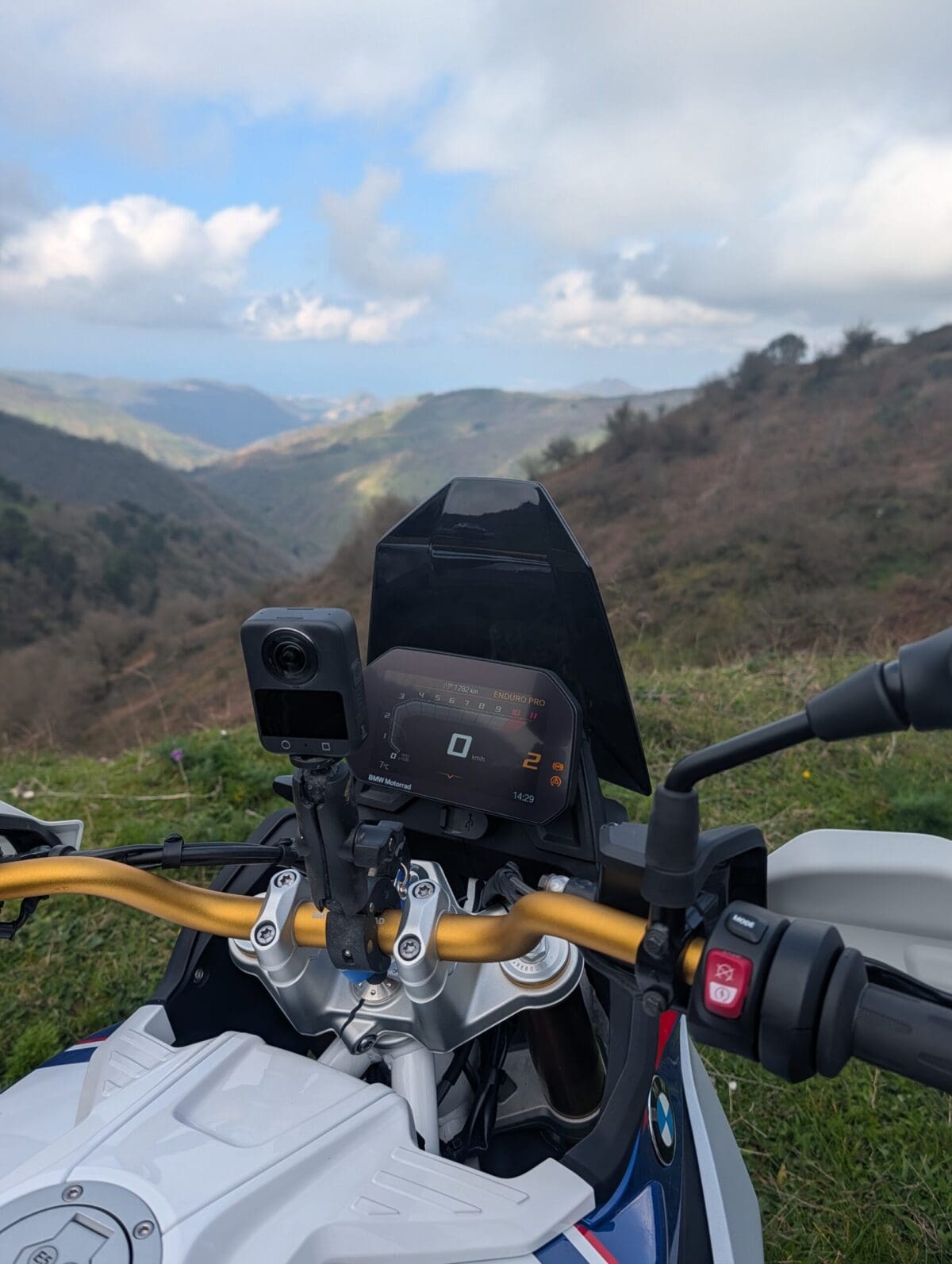
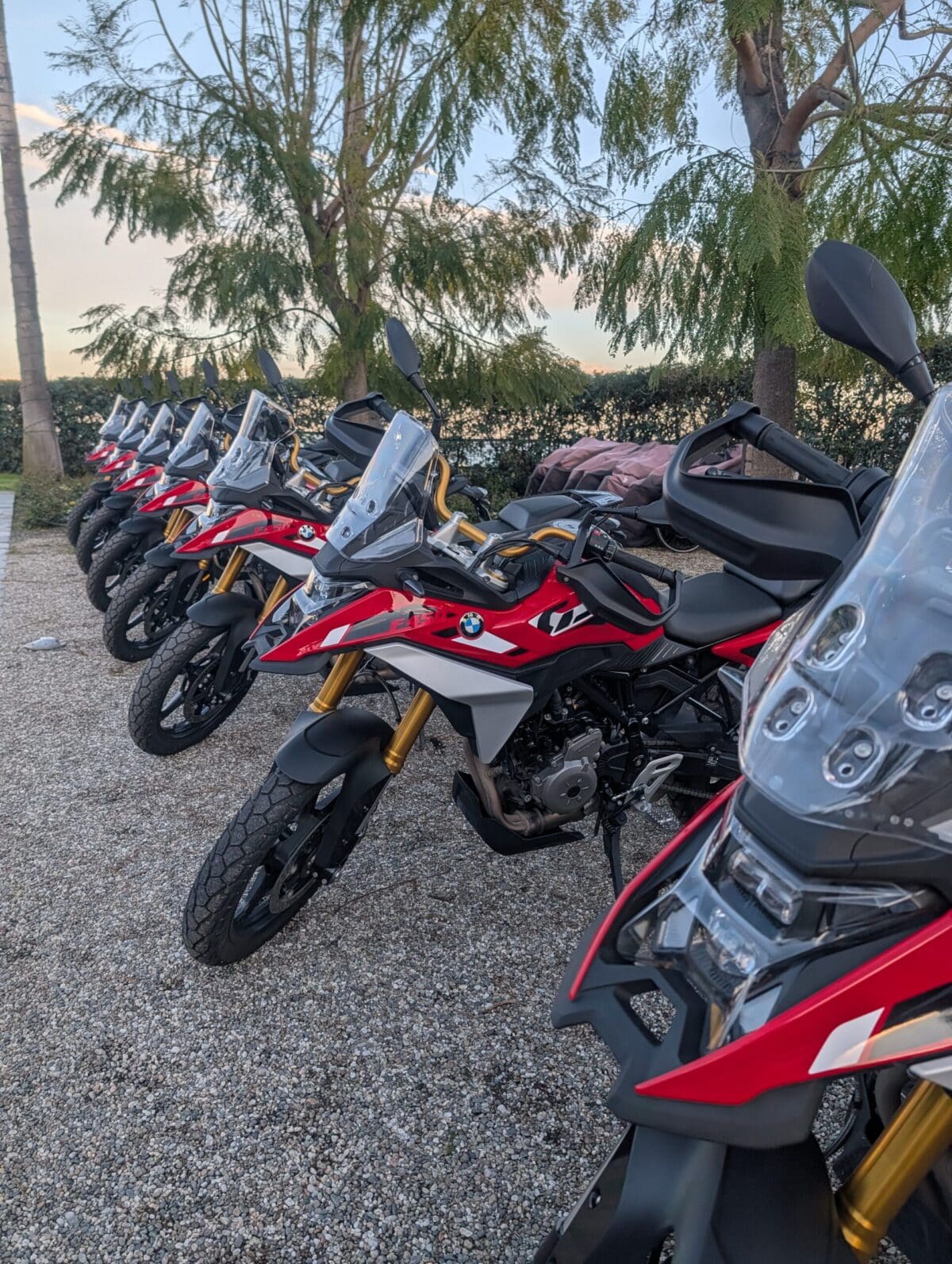
Aesthetically, the 450’s design is massively in keeping with the bigger GSs, and its ergonomics aren’t far behind either… upright, commanding and adaptable. A two-piece seat comes as standard (845mm), with low and high options available, alongside adjustable levers, bar risers and off-road-ready footpegs. Clambering on the bike for the first time, me and my 5’ 9” frame didn’t need a step ladder to do so, but it felt tall enough to cause a few issues if you were much shorter in the leg. You very much sit in the bike, wrapped in place by the stepped saddle and the meaty 14-litre fuel tank. Up front is a 6.5-inch TFT dash, which really draws your eye. Essentially, it’s the stock fitment screen that we’ve seen find its way onto most modern Beemer’s in more recent years, first debuted on the 2019 S1000RR… a very nice touch and a reminder that this is no bargain basement motorcycle. The switchgears are near identical too, featuring the brand’s unique scrolling wheel. It looked a tidy set up and I had no qualms flicking through the riding modes and tweaking at the setup as we began our joyride on the Sport version.
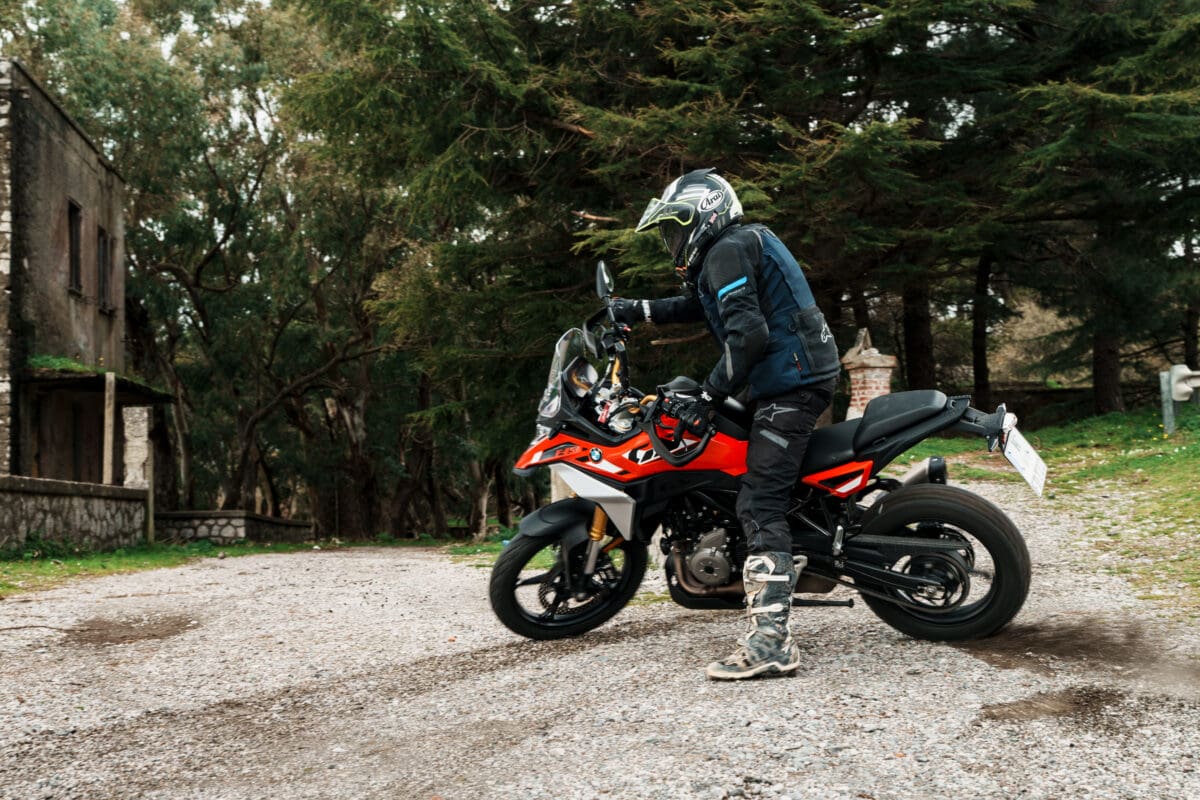
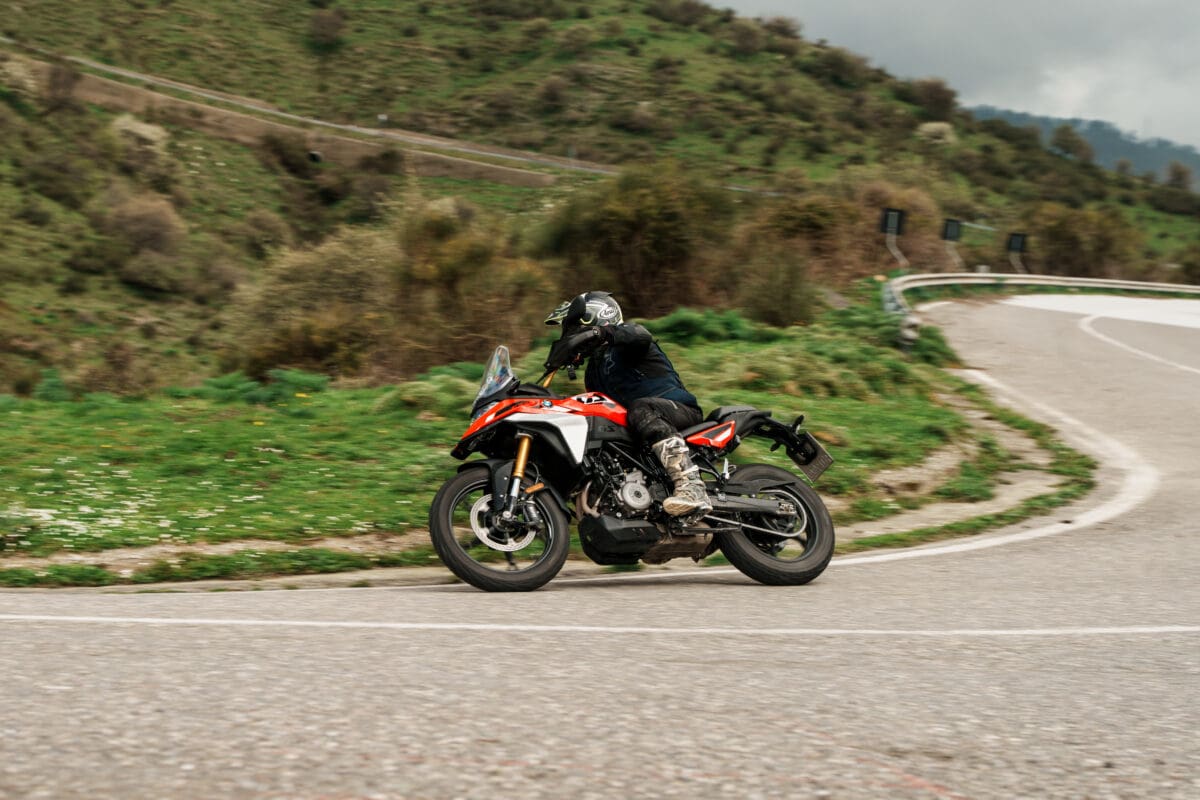
Ticking off a bit of town work first, the BMW proved impressively agile and surprisingly potent. Once the wheels were in motion, its height and weight seemed to melt into irrelevance, leaving me with a comfy office to tackle the relentless twists that’s led us up towards Mount Etna. I hadn’t really had too many preconceptions of the Beemer, but what it was delivering I was liking, egged on the most by its motor’s eagerness to deliver. Let’s not beat around the bush… 47bhp isn’t exactly arm-wrenching, but the way the twin delivered its power made me think it was much more potent than that. Every tweak of the ride-by-wire throttle brought about a fresh way of enthusiasm to the rear wheel, delivered with faultless fuelling and aided by the slick quickshifter system. Admittedly, riding in chunky enduro boots, I was cursing the tech at first as my fat feet were prone to notching the selector and provoking an undesired gear change. But with time and added finesse, such dramas became a thing of the past, meaning I was fully able to indulge in the BMW’s cornering prowess. Those are words I never thought would come out of my mouth, but this thing was a right laugh in the bends. The stock fitment, dual-purpose Maxxis felt about as talkative as a brick, but they gripped impressively well. Once I’d got my head around their vagueness, I was pitching into bends with impunity, exploring the composure of the bike’s plush feeling suspension. It was neither too firm nor too soft for my liking, being capable of stomaching the roughness of the mountain roads we were pitching around, whilst keeping the bike steadfast when the time came to hunt out peg-grinding levels of lean angle. Another trick it had up its sleeve was its ability to alter a line mid-bend without any consequence. 178-kilos doesn’t warrant a ‘slimmer of the year’ accolade, but the mass was well packaged and encouraged solid levels of litheness. There were no two ways about it, the Sport model had impressed me, and I only hoped the Trophy-spec would do the same when we hit the trails that afternoon.
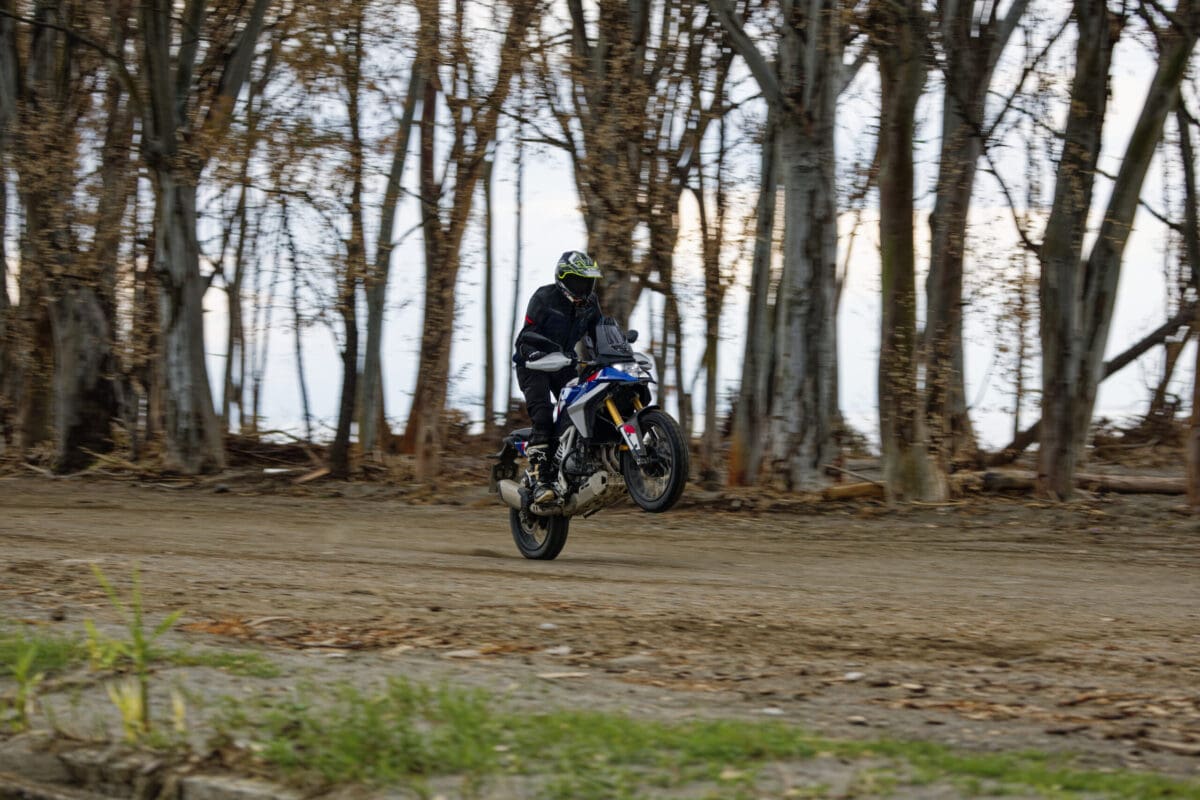
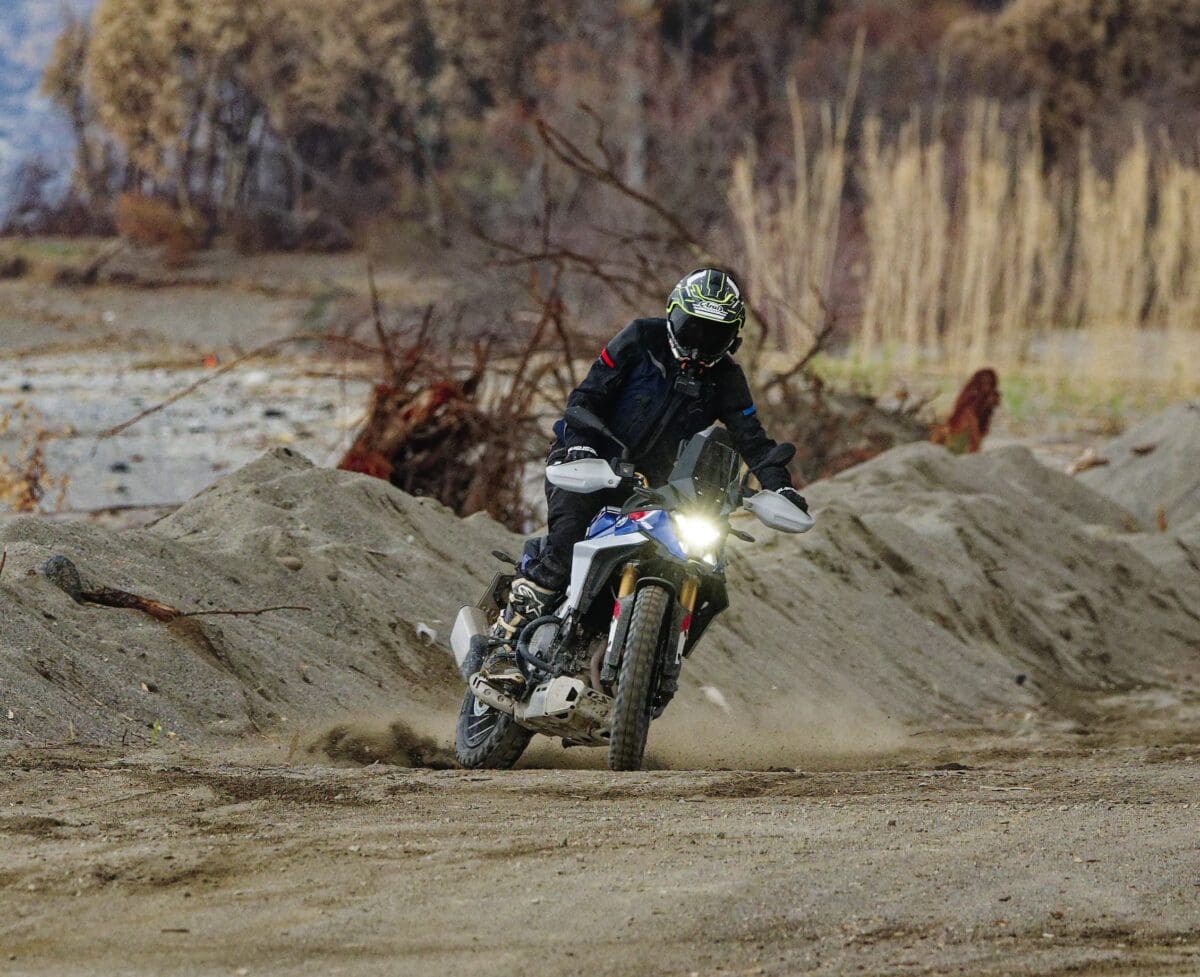
You’d be forgiven for thinking the Trophy bike is just a blue version of the Sport… but that’d only be half right. Whilst the core is the same, incorporating the same adjustable pogos at each end and a similar level of tech, you also get a different screen, handguards, engine protection and a much more substantial sump-guard. But the big twist, and the main reason for its heftier pricing, is it’s the only model to come as standard with the aforementioned ERC-system… it’s also worth noting you can’t have this bike without it. Having spent the morning on the manual geared bike, I was keen to see what the new gearbox tech brought to the party. I’ve ridden a few bikes with similar systems before, including the 1300GS, but the quirkiness of the ERC took a little getting used to. Setting off, I was surprised at how many revs were needed to get the Beemer into motion. I later learned that this was all down to emissions legislation, of all things, but that offered zero consolation to me. When riding, and especially off-road, I lean on the clutch heavily. Not being able to dictate, let alone anticipate, its engagement made the riding hard going. It must’ve taken me a good thirty minutes or so to start trusting the system, anticipating its engagement. And even then, I’d be a liar if I were to say I was a fan of the tech. The lag on tap was frustrating and nabbed a bit of appeal from the BMW. I just couldn’t get my head around it, and especially so when tackling some slower, harder off-road sections. In the fast stuff it was fine, but when the pace dropped and the ERC aspect raised its head, I found myself questioning what was wrong with a conventional clutch? Call me old-school, but that’s just how my head is wired. With time, it became more second nature, but never to the extent it was preferable over a traditional clutch. What it did ensure was there was zero risk of stalling the bike during the trickiest of terrain, as the motor would keep purring away even at a standstill, regardless of what gear I was in or how slow I was riding. Admittedly, I liked that aspect and acknowledged that with time on my side, I’d maybe warm to the system. But when you’re ruts deep, trying to guide an awkwardly sized 19” front wheel across tricky terrain, niceties are very much an afterthought. Quite simply, I wasn’t sold on the ERC system… or the 19” front. I get why BMW decided to go down that route, kitting the bike with a 19” front tyre over a 21”. On the road, it made perfect sense. But off-road, when tackling deep sand, loose soil and anything that wasn’t hardpack, the front had a mind of its own. It was slow to turn, required too much energy and input, and rarely rewarded me with the confidence to attack the terrain as I’d have liked to. In the UK, riding green lanes, I bet it would be mint, especially when kitted with the Metzler Karoo 4s our bikes had fitted. But navigating an eclectic mix of terrain, some bits more technical than others, I wasn’t very trusting of the grip on tap.
As they say, all’s well that ends well and the BMW proved pleasantly capable throughout the afternoon’s endeavours. We took in a mix of light trail and soft sand scenarios, and not once did I hit the deck. Nonetheless, I’d argue some front and rear saves were more down to luck than anything else. For most of the time, I rode the bike with no traction control, no rear ABS and very little regard for consequence. Owing to the 450’s nimble nature, I was able to get away with a lot more than I’d expect, and that helped me warm to the GS. Stood up over the bike, bracing the wide bars and giving it some big licks with the throttle, I couldn’t help but appreciate the magnitude of the model. It was a million miles from a large capacity GS, yet it still had me hooked, with a broad smile smacked across my face. If anything, the playful nature of the motor made it so much more engaging. Nowadays, we’re taught that bigger is better, but the 450 was hitting the spot and reminding me that capacity wasn’t everything.
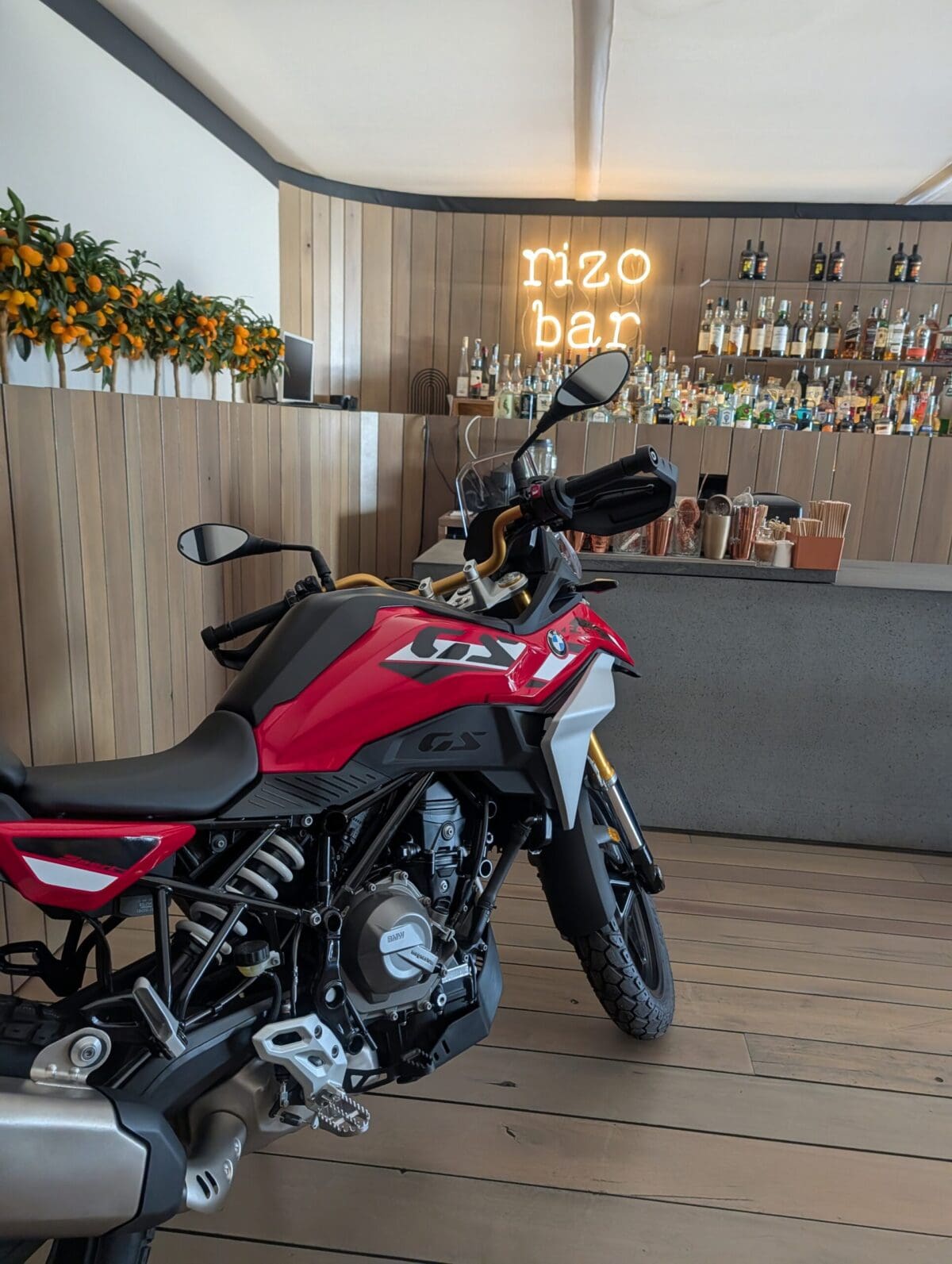
Having spent over nine hours in the saddle of the F 450 GS, I’d come to gain a decent appreciation of what it had to offer. By and large, it’d impressed me on a level that I simply hadn’t expected. I guess what’s worth noting is that whilst this bike is smaller, it’s not exactly cheap, with the Trophy spec machine hitting home at £7,699. Is that good value? To me, it came down to what you expect from a bike? Compared to the likes of Suzuki’s DR-Z400S, the BMW offers a chunk more in many respects… and for less money. The Sport model we rode first, which proved a cracking bike on the road, costs £7,379. And there’s also a stripped-back base model that’s priced at an affable £6,929. Collectively, they represent three solid options for someone wanting a credible and capable adventure bike… each, so much more appealing than the 310 GS. Only time will tell whether the 450 sells in the same numbers as the 310, but if it doesn’t, it won’t be down to a lack of effort on BMW’s point.
Specs: BMW F 450 GS
Engine.
Type: 420cc Parallel Twin
Bore x Stroke: 72mm x 51.6mm
Fuelling: Electronic injection
Claimed Power: 47bhp @ 8,750rpm
Claimed Torque: 43Nm @ 6,750rpm
Electronics.
Riding Modes: Yes
Traction Control: Yes
ABS: Yes
Quickshifter Yes
Wheelie Control: No
Launch Control: No
Chassis.
Frame: Tubular steel trellis
Front Suspension: 43mm USD, KYB forks with preload and rebound
Rear Suspension: KYB adjustable monoshock
Front Brakes: Brembo four-piston caliper, single 310mm disc
Rear Brake: Single-piston caliper, 240mm disc
Dimensions.
Wheelbase: 1,465mm
Seat Height: 845mm
Wet Weight: 178kg
Fuel Capacity: 14 litres
INFO
Price: From £6,929
From: www.bmw-motorrad.co.uk