
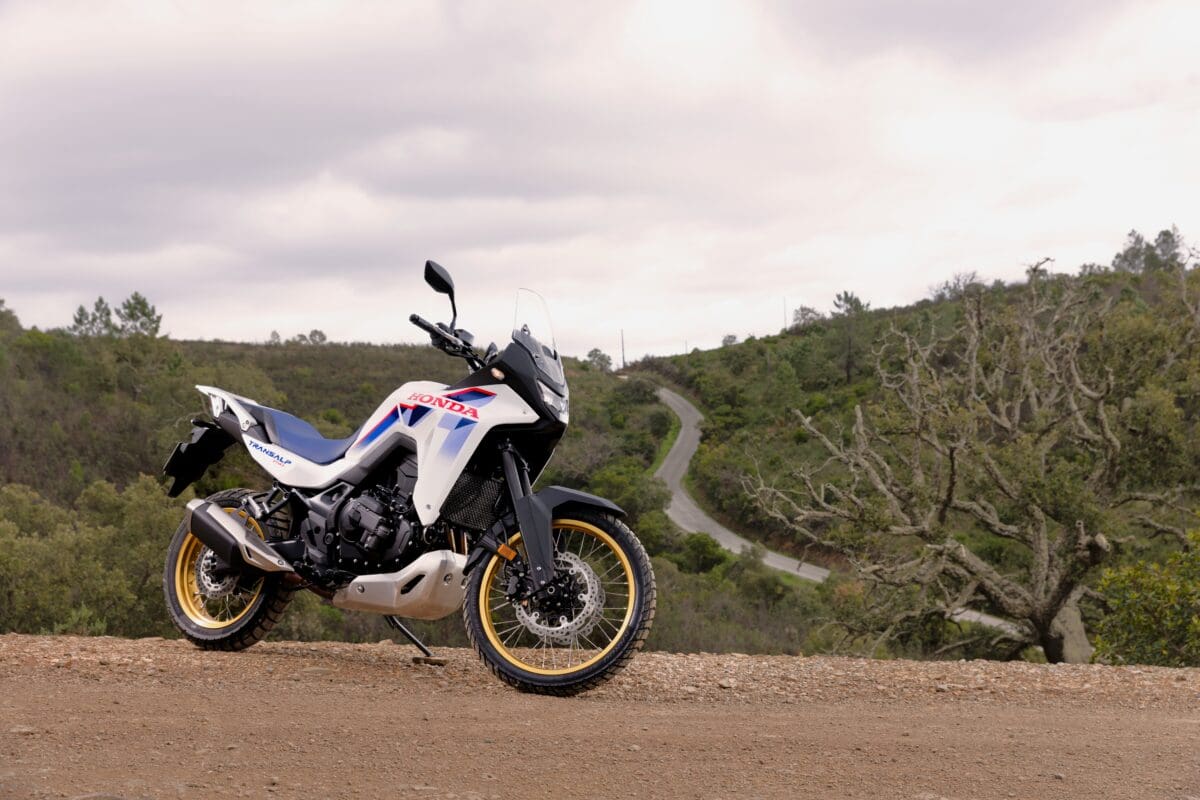
Four decades after its debut, the Transalp shows no signs of slowing down, says Dave Manning.
Somewhat surprisingly it was 40 years ago when the Transalp was first launched by Honda and, while it had a break from the line-up for a few years, it’s now well and truly back in the range and proving to be a great seller, so it only seems natural that, after being brought back with the SOHC parallel twin powerplant a couple of years ago, the 2026 model gets a tweak or two to ensure that it stays at the top of those sales sheets.
That first Transalp launched in 1986 had a 600cc vee twin engine (well, actually 583cc), later increased to 650cc (in truth, 647cc) in 2000 and then 700cc (680cc) another eight years later, before its hiatus in 2012, with an eleven year wait before the current 755cc parallel twin version was launched. Honda’s PR at the time of the original launch called the Transalp a ‘new concept touring bike’, and while it probably wasn’t really fair to call it a new concept, given that the BMW R80G/S and Yamaha Ténéré had already reached the market before the Honda, it was, nonetheless, something of a game-changer and while the Transalp did remain under the radar for so many people it was still a good seller and gained a hardcore following of folk who had discovered that it was an entirely practical machine capable of far more than many might expect!
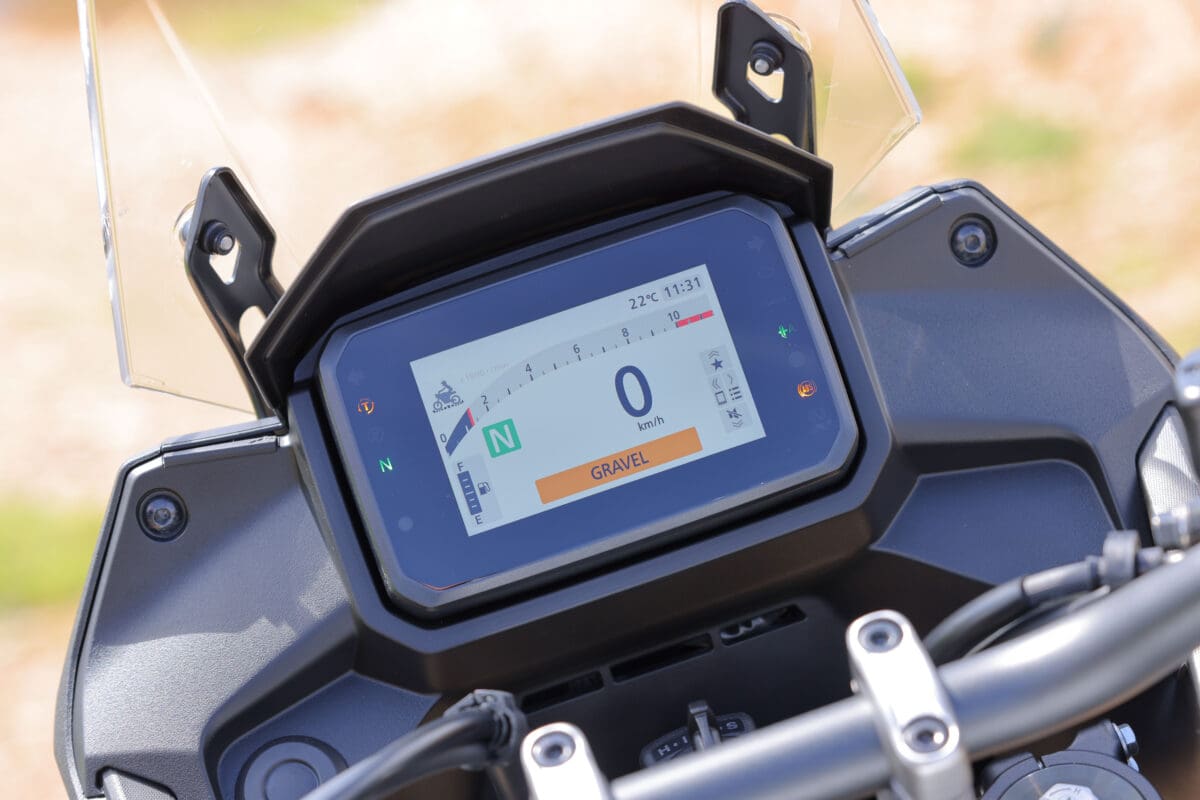
And the revitalised midrange adventure bike has proved itself to be an excellent addition to the Honda range, even though it seems that it hasn’t got the same go-anywhere reputation that its bigger sibling the Africa Twin has, which is rather bizarre given that most folk with the 1100cc twin spend even less time off road than the average Range Rover… there are, of course, always exceptions to the rule, and while there are those Africa Twin owners who rarely give their knobblies a chance of rolling on tarmac, there are also Transalp owners who have a penchant for getting dirty, and take their bikes to roads less-travelled, and thus contradict the apparent pigeon-hole that the Transalp has found itself in as far as some are concerned – that of the perfect commuter and occasional tourer (it is no great surprise, after all, that the Transalp proved popular with motorcycle couriers when such a job was still a thing).
The truth is that those two tasks – touring and commuting – are covered with a supreme ability by the Transalp in each of its model guises, but there is so much more to the midranger, and the tweaked-for-’26 version expands on that multi-talented, Jack-of-all-trades aspect.
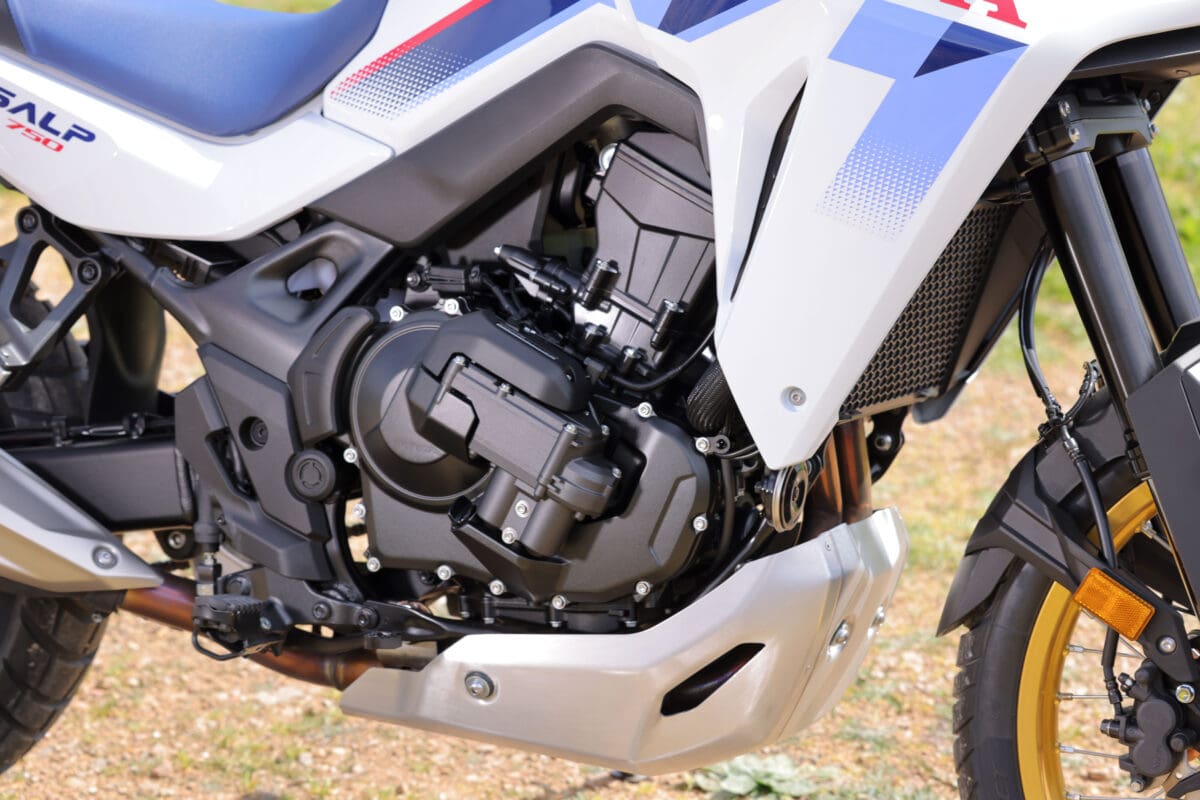
For the new model has had some tweaks to the airbox inlets – in the form of patented ‘Vortex Air Flow’ ducts running from the fairing sides and into the airbox – and also has upgrades in the form of fully-adjustable forks, but the big change that’s been introduced to the parallel twin (not just in the Transalp, as the ’26 Hornet also has the same upgrade, and more on the naked bike in a later issue of MSL) has come with the addition of the E-clutch system that was premiered on the CB650R and CBR650 a couple of years ago. In fact, the Transalp is now not available with a conventional clutch set-up!
In short, the E-clutch is not an automatic gearbox, it is an electronic override for the cable clutch system, which remains in place and can still be used conventionally, while the electronics that take care of the E-clutch mean that you never need to touch the clutch lever at any point. You do still use the foot-operated gear lever to choose the ratio suitable, and the dash will flash an icon at you if you’re in too high a gear, but you’ll never stall with an E-clutch, and even very slow speed work can be undertaken with no issues, by using the rear brake to temper engine output rather than by feathering the clutch lever to suit.
That expanded versatility with the new E-clutch isn’t just a bonus on road, but also when hitting the rough stuff too. Deleting the possibility of stalling in awkward going improves safety when off-road, and also makes for a far more enjoyable experience especially if, like me, you’re perhaps not that experienced in riding off-road. And before you say that the E-clutch removes the ability to slip the clutch when required – such as when getting bogged-down in heavy mud, or when hitting an unexpectedly steep incline – remember that it can be overridden by the conventional clutch by using the lever as normal, after which it resets to E-clutch operation. Other systems do not have this option, so it could be argued that Honda’s E-clutch is perfect for this style of on/off road machine, with the very small additional weight added by the E-clutch being irrelevant when you think about the weight of other adventure bikes on the market. And if you want to argue about price, then the E-clutch version is just one hundred quid more than last year’s Transalp, and the 2026 version has the aforementioned other upgrades so you could argue that, in relative terms, it’s actually cheaper! And, if you don’t want the E-clutch but still want the ’26 model with the other upgrades, then you can simply switch the E-clutch off!
But we’re getting ahead of ourselves a tad here, let’s take a look at what the new model is like from the rider’s seat. The 850mm high seat doesn’t actually feel that high, probably because you feel like you’re sat ‘in’ the bike, and it gives you a lot of confidence that taller machinery takes away. There’s also a 30mm lower version of the seat that will probably feel truly subterranean, given that I was planting both plates of meat firmly and solidly on even rugged Portuguese trails.
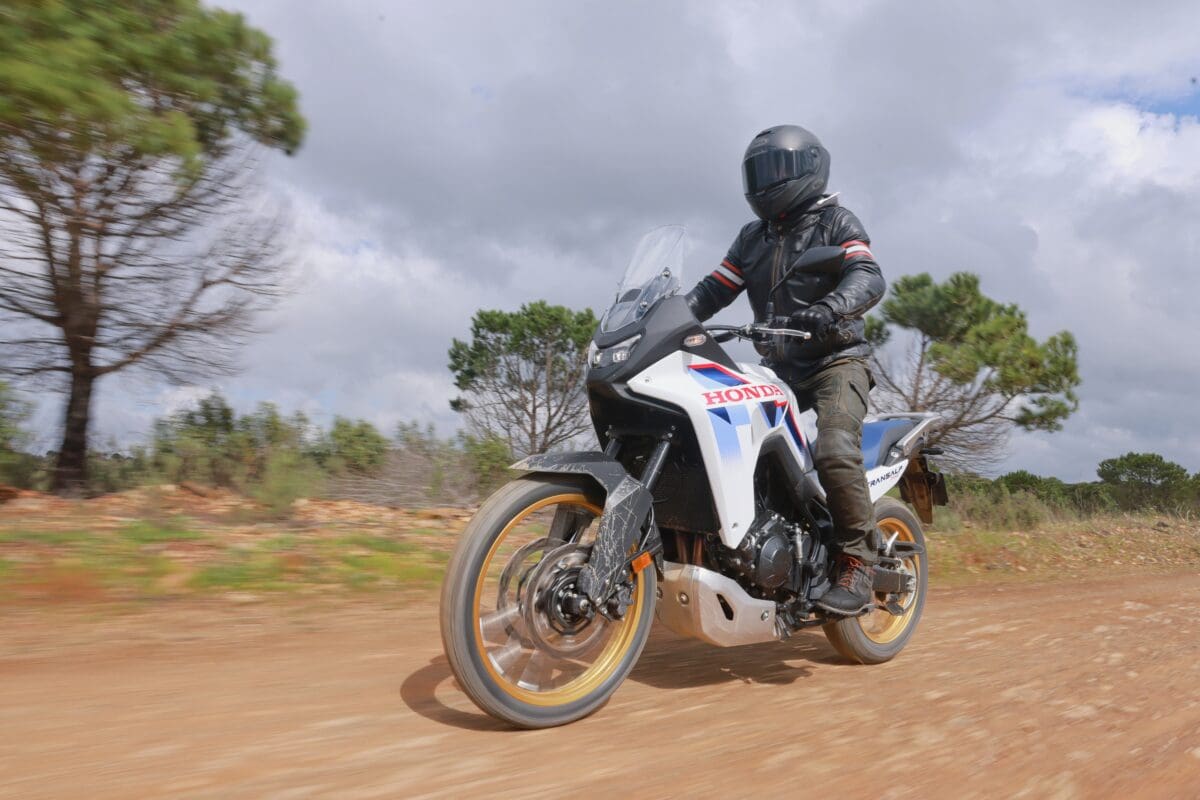
The 5” TFT screen seems a little small, due to larger offerings from other manufacturers, and its landscape rather than portrait configuration does feel a little outdated now so many models have the taller style, but it’s perfectly fine at doing what it does, and easily legible in all lighting conditions. It’s also got RoadSync connectivity, so you can see who’s trying to call your phone / how lost you are / what music you’re listening to etc.
I do have a little gripe with the self-cancelling indicators or, as I prefer to call them, ‘bloody self-cancelling indicators…’ given that I found myself continually either trying to cancel them when they’d already self-cancelled, or having to switch them back on when they’d gone off too soon.
Riding modes are Standard, Sport, Rain, Gravel and User, and that last one is probably the one that seasoned explorers, green laners and adventurers will focus on, given that the Gravel mode doesn’t perhaps give you all of the features that you may want in a, well, gravelly situation. In particular, the rear ABS isn’t switched off, but is held down to level 1, although you can configure it to be turned off entirely in User mode. With the ABS turned off, the Transalp’s clutch becomes even more useful, as you’ll not be stalling the engine due to a closed throttle and lots of back brake engaged to turn the bike – the E-clutch takes over and ensures the engine keeps a tickover, engaging drive again as soon as you want power at the back wheel.
That, frankly, amazing ability from the clutch is, somewhat bizarrely, thanks in part to a side-project that Honda have been playing around with for some years. You’ll have seen the Asimo robot project that was started way back at the turn of the Century (it still doesn’t seem right using that phrase to refer to the year 2000), and maybe have seen how it has progressed over the years, being able to run, jump, spin etc (and, yes, still having an ability to fall over at the most entertaining moment). Well, the technology and software that has been developed to control the motors that operate Asimo is the self-same tech that is now being used to operate the E-clutch fitted to the brand’s motorcycles! And this is why it doesn’t just operate as a basic on/off type affair, but can feather the clutch like you might with your hand on down-changes, can feed the clutch in at an appropriate rate from a standing start dependent on how hard you operate the throttle (and on which mode you’re in), and it’s why it makes the quickshifter smoother and faster too. Thanks Asimo!
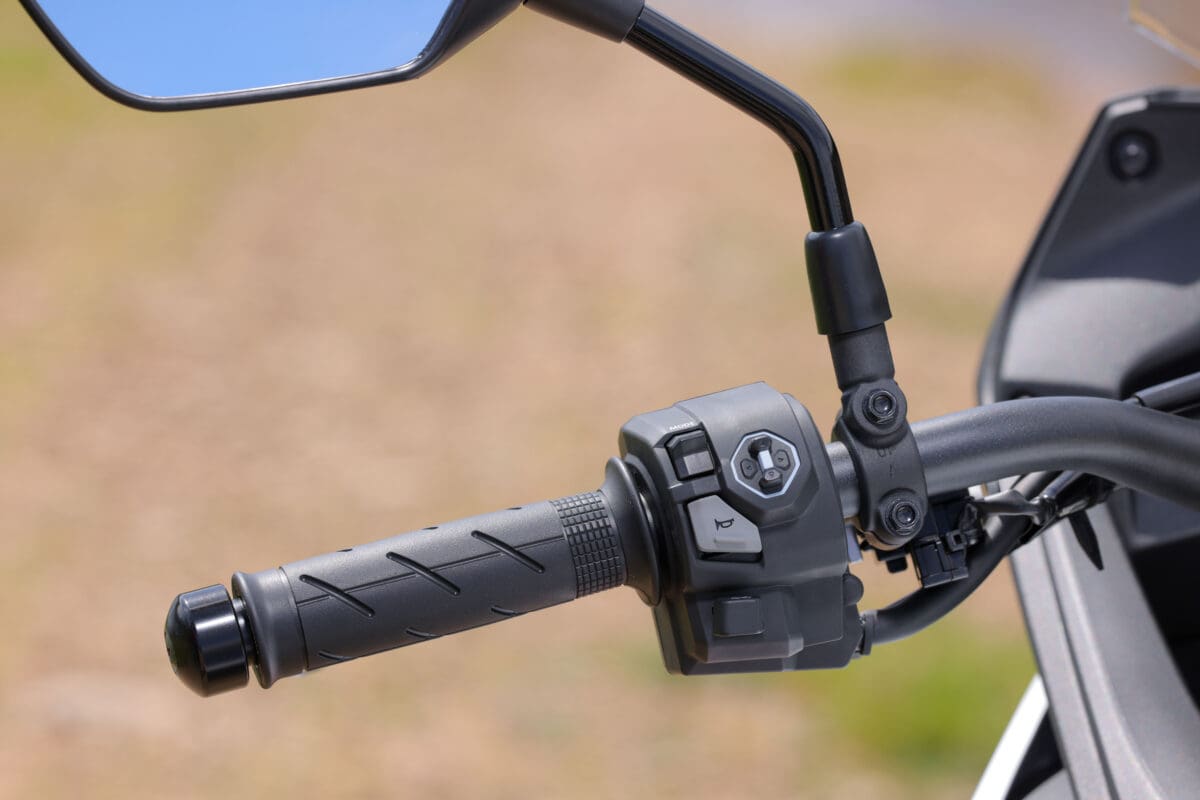
The differences between the Standard, Sport and Rain modes are pretty much as you’d assume, with throttle sensitivity essentially being the crux of it, and while Rain mode did bring a little comfort and security in the short, sharp showers we experienced in Portugal (with gusty winds and even hail thrown in for good measure!), once I’d got comfy in the Transalp’s saddle I was happy staying in Standard in the wet conditions, swapping to Sport for dry roads and Gravel for the off-road section we used.
We covered a decent stretch of that gravelly off-road on the launch, enough to realise that the E-clutch works impressively in dirty situations and even allows shifts when the rear wheel loses traction and spins; that the Transalp is every bit as competent as any bigger adventure bikes; and that if I were choosing an all-rounder that could cater with easy-going green lanes, fire roads and gravel trails, then a midranger like the Transalp makes far more sense than a 140bhp, 300kg behemoth! At not much more than 200kg, if I toppled off the Honda, I’d be able to pick it up again without endangering the integrity of my stomach wall.
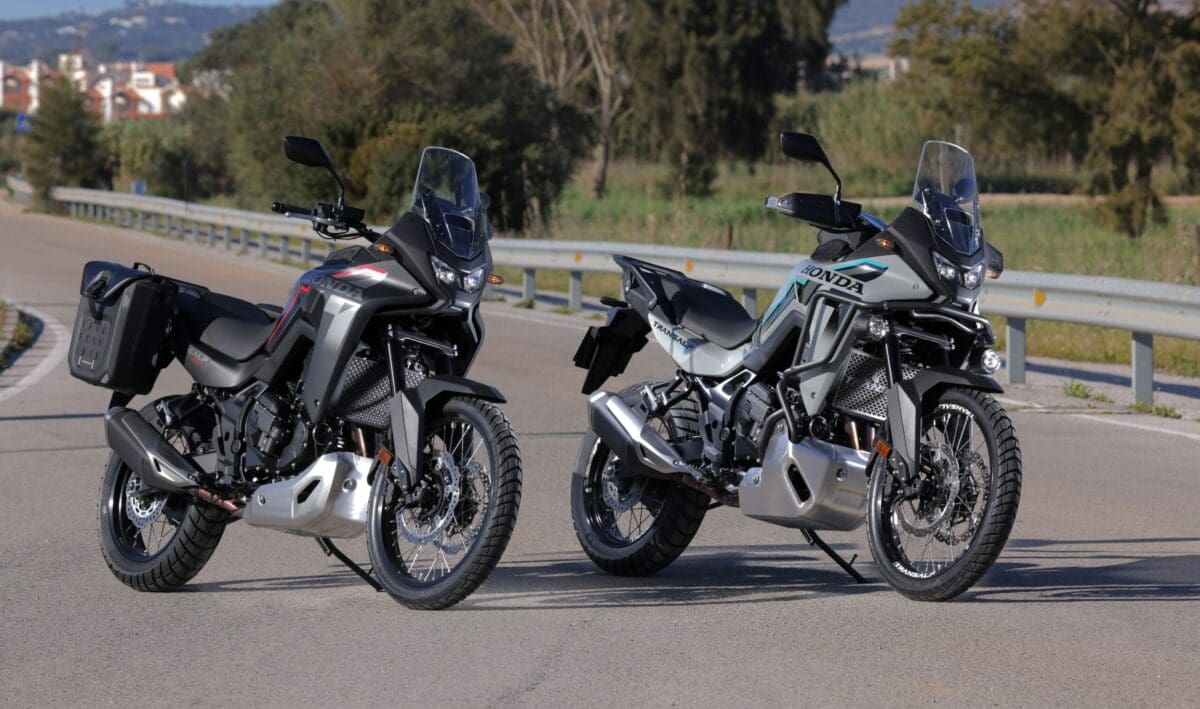
And then, dirty fun over and done with, we got some decent road miles under our belts, including a good section of the superb Portuguese National Route 2, which in itself is a good enough reason to head to the area on a motorcycling tour. Again, the Transalp shattered my illusions as to how it would cope. Not only did it ‘cope’, it positively shone on the tight and twisting tarmac that barrels along hillsides, past olive groves, through tiny villages stuck in time, and blasting past the occasional tractor, farmer’s pick-up truck or wayward tourist clearly distracted from the Algarve beaches and golf courses. The super-smooth shifting up and down through the ‘box, whether short-shifting and staying sensible, or revving through up to the peak power point at 9,500rpm, and getting the delightful roar through the fettled intake, reinstated the benefits that I’d already found from the E-clutch. The tweaked suspension worked as well as any other that I’d ridden on these roads (yes, this area is popular for bike launches!), and even though the Transalp wears dirt-appropriate wheel sizes, the 21” front steered swiftly and accurately, the Metzeler Karoo Street rubber bringing grip and feedback in equal amounts. I can quite honestly say that, on that day on that road, I really didn’t want to be on any other bike than the Transalp!
When the Transalp first reached the market, back in ‘86, I admit that I paid it little attention. It seemed, to the 40-year-younger me, to be a little too ‘Honda’ – too “nice”. While it could clearly be a decent enough all-rounder, and particularly applicable to sensible folk who wanted a sensible motorcycle, it just didn’t have an exciting edge to appealed to my teenage mindset. Of course, four decades later I have different needs and desires, but the abilities and appeal of the Transalp have also changed, and it feels like the two of us have met in the middle. I want practicality and comfort, a potential for off-road exploring, reasonable fuel consumption and an ability to surprise sportsbike riders on twisty tarmac. Step up Mr Transalp, I’ve found a job for you!
Specs: Honda XL750 Transalp E-clutch
Engine: 755cc, parallel twin, SOHC, water-cooling, 8 valves, 270° crank, 87mm x 63.5mm bore & stroke, 11.0:1 compression ratio
Power: 90.5bhp (67.5kW) @ 9,500rpm
Torque: 55.3lb-ft (75Nm) @ 7,250rpm
Frame: steel diamond frame
Rider aids: 5 ride modes, RoadSync connectivity
Brakes: (F) twin 310mm discs, two piston calipers, (R) 256mm disc, single piston caliper
Transmission: 6 manual gears, E-clutch & chain final drive
Suspension: (F) Showa 43mm forks, fully adjustable, 200mm travel, (R) monoshock, fully adjustable 190mm travel
Wheels/tyres: aluminium rims, stainless spokes, (F) 90/90×21” Metzeler Karoo Street tyre, (R) 150/70×18” Metzeler Karoo Street tyre
Seat height: 850mm
Wheelbase: 1560mm
Fuel capacity: 16.9 litres
Fuel consumption: 54.7mpg (claimed)
Weight: 216kg
Warranty: 24 months (6 years with dealer servicing)
Service intervals: 8000 miles / yearly
Price: £9,999
Contact: www.honda.co.uk