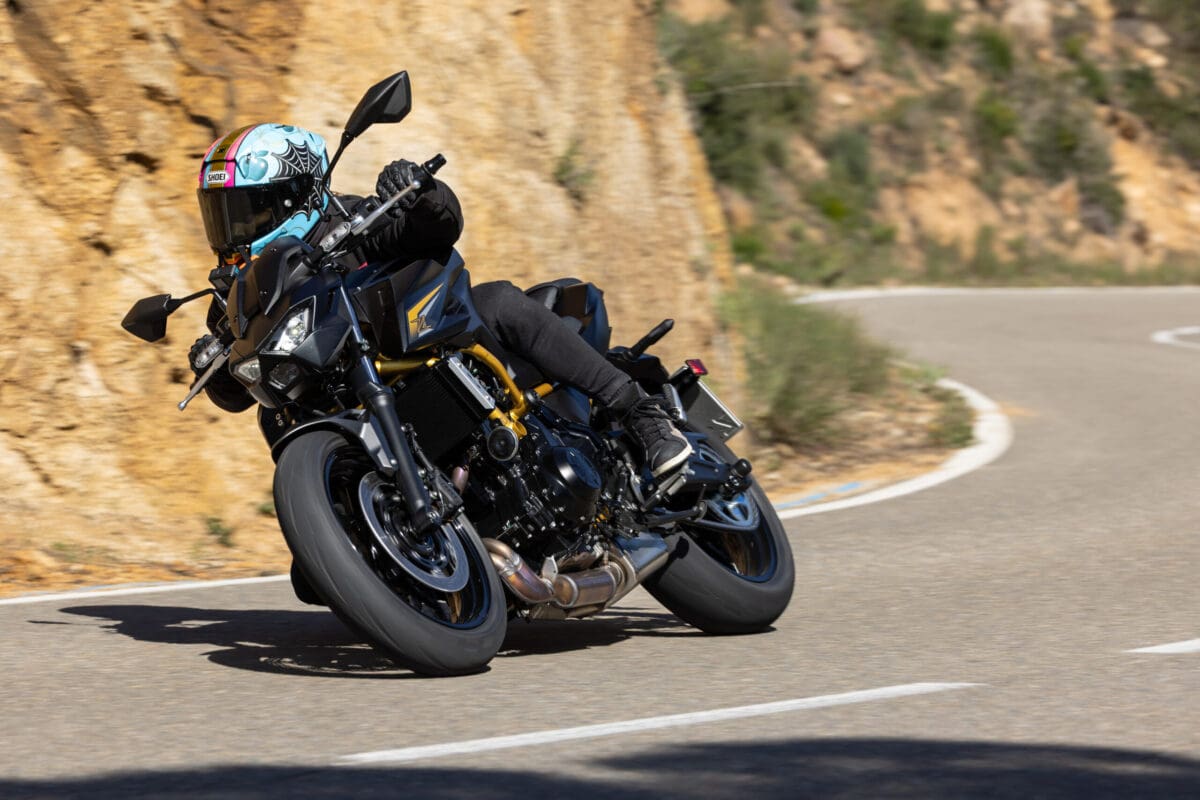
The Kawasaki Z650S is the new kid on the block, trying to take the spotlight in a fiercely competitive middleweight naked class… as Grace Webb discovers.
For 2026, Kawasaki are updating a heap of their models, and one of them is their Z650 – a middleweight model that’s part of their Z naked family, which includes their beginner Z125, Z900, Z1100 and top of the range supernaked star… the Z H2. The last time we saw an update to Kawasaki’s Z650 was back in 2020, which feels like a lifetime ago, so it’s arguably due a refresh and that’s exactly what they’ve done. The Z650 remains an option to riders in their wide choice of A2 compliant motorbikes, with familiar styling along with new bits of tech like traction control and smartphone connectivity, for a price of £7099. But now, the offering of the brand-new Z650S for a hundred quid more, at £7199, could be an even more tempting option. So, what have they actually done to ensure the new Z650S lives up to those bold words, and can it only offer a package that suits new riders? Ultimately, can it compete in the middleweight naked class – one of the most competitive categories on the market? I headed to Barcelona for the international launch which seemed the perfect destination to wiggle the Z650S through the busy Spanish streets and then stretch its legs up into the mountains for the morning.

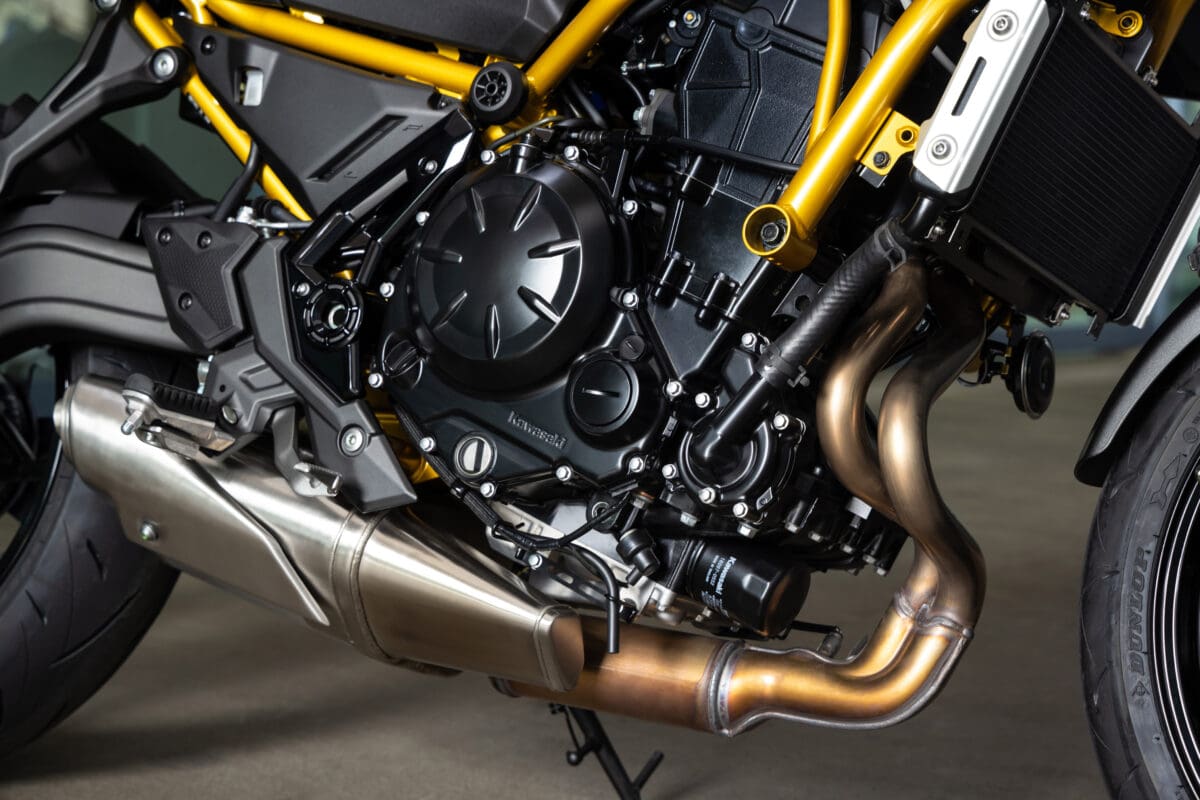
So, at the heart of this package holds Kawasaki’s 649cc parallel twin engine, producing about 67 bhp and 64 Newton meters of torque at around 6,700 rpm. Kawasaki have a rich racing history and have taken learnings, particularly from their Isle of Man TT exploits with this twin engine, and applied principles knowing that this is a durable and proven engine. But of course, this is an engine that’s been developed for the road, and reducing emissions for road bikes is something that every manufacturer is having to contend with in recent years, so the addition of an oxygen sensor to the exhaust system now sees the Z650S engine ticking the Euro5+ box. Ultimately, there’s been no huge change to the engine, which last got fettled on the 2020 model, however, it’s still a great little motor that’s very much optimised in this Z650S platform to get good performance in the mid-range, along with a nice tickle of torque lower down.
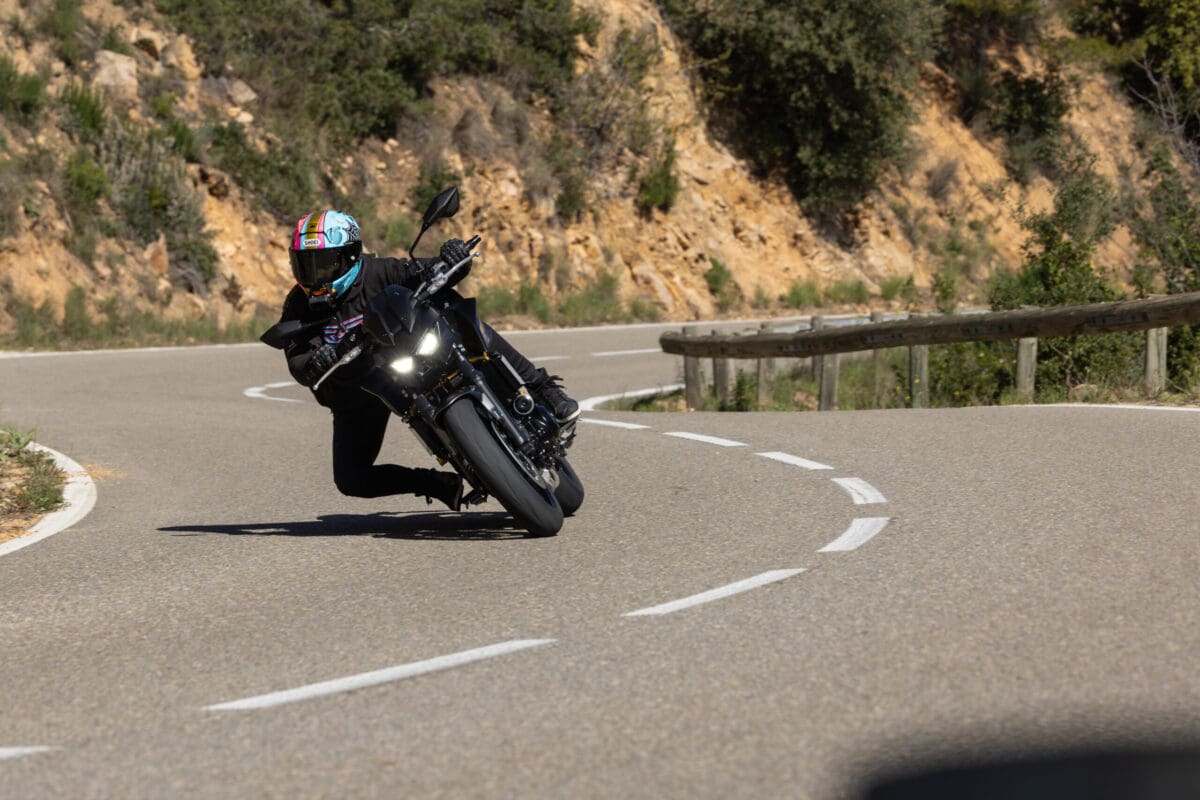
Out on the roads, those alterations rang true, with the corner pick-up being strong, and a satisfying surge of acceleration as I opened up the revs into the mid-range, which was noticeable straight away as I pulled onto the dual carriageway outside Girona. As I clocked up a few more miles, the only niggle I had with this engine was that the power delivery could be a bit too surgy; it wasn’t as smooth in places that I’d have liked it to be – particularly in 1st, 2nd and 3rd gear situations. I think it would only be enough to put off a timid new rider but for me as someone that’s been around the block, I saw this as a playful challenge to finesse the Japanese middleweight’s mechanical cables. There’s an element of rawness that I quite like about the direct connection but does mean the Z650S will reward fluid riding and, ultimately, I think would really develop the skill of a new rider.
Throughout town riding, I noticed that I could be quite lazy with the gears. When I thought about knocking it down a gear, the Z650S proved happy to stay in a higher one and I could enjoy the mid-range burble soundtrack… and it really did sound peachy when I opened it up off the traffic lights. Staying in a higher gear at lower speeds also seemed to settle the throttle and smooth out any snatchy behaviour. The simplicity of the Z650S is reflected in its rider modes – in that it doesn’t have any. The set-up is what you get, and you just get on and go. There’s something quite refreshing about that; not having to tweak a load of settings in a complicated dash, which actually might be appealing to some riders, but this is mostly down to the fact that the Z650S doesn’t run a Ride-By-Wire throttle system, which these days we’re seeing introduced on most bikes in this category. I think a Ride-By-Wire system would better optimise the acceleration, but the Z650S has got such a good chassis that it kind of gets away with not having this technology – and Kawasaki can keep the cost down whilst doing so.
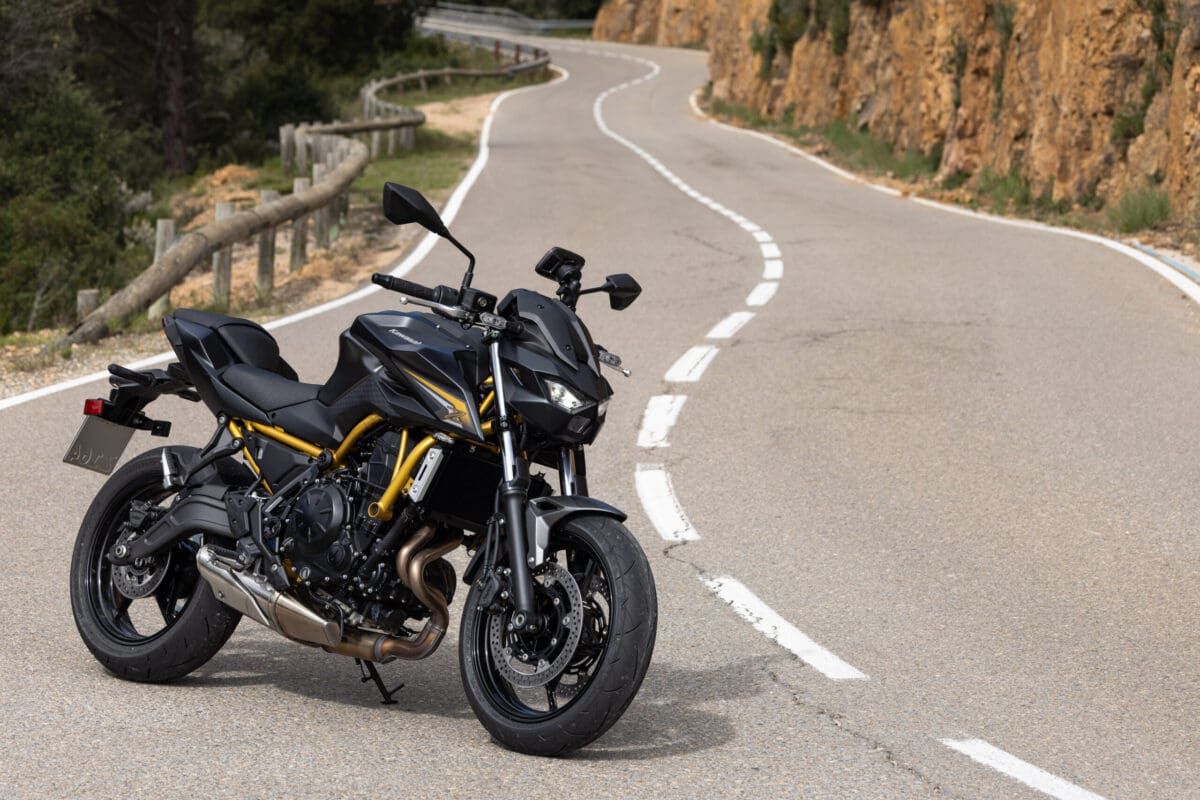
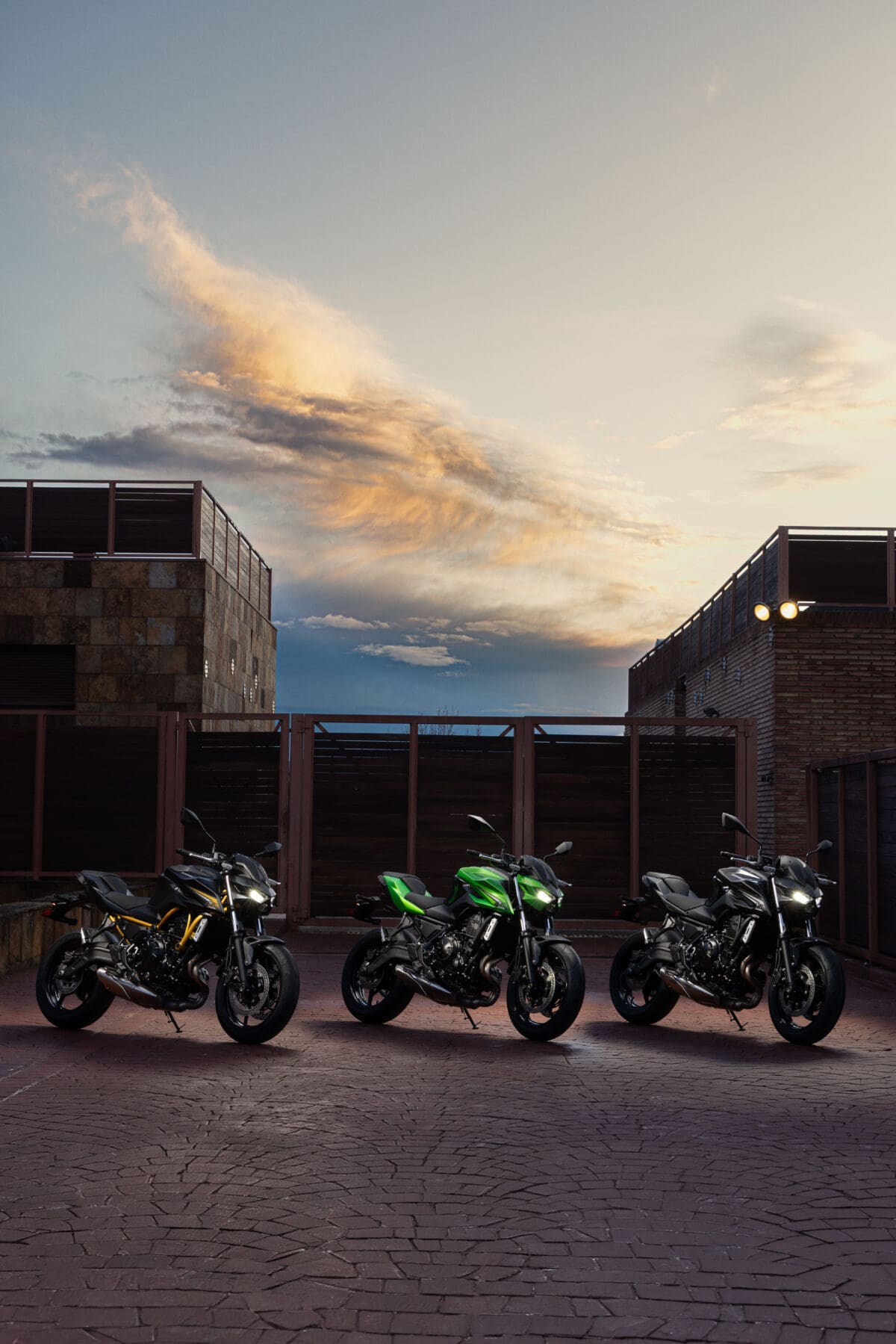
We see again the Z650’s steel trellis frame, which I think looks great, highlighted in gold on the ‘Metallic Matte Graphenesteel Gray’ colourway – and the frame is one of the key components that contributes to the Z650S being so lightweight, with it coming in at only 15kg. The lightness and rigidity of the frame contribute to the overall nimble handling of the bike – both in and out of town. Kawasaki have nicely paired this with a short wheelbase, a low wet weight of 190kg and a decent seat height of 810mm, which I found added to the whole easy handling and manoeuvrability of the bike – again, all ingredients that would suit a new rider looking for confidence but also, who doesn’t want that, even if you’re an experienced rider?
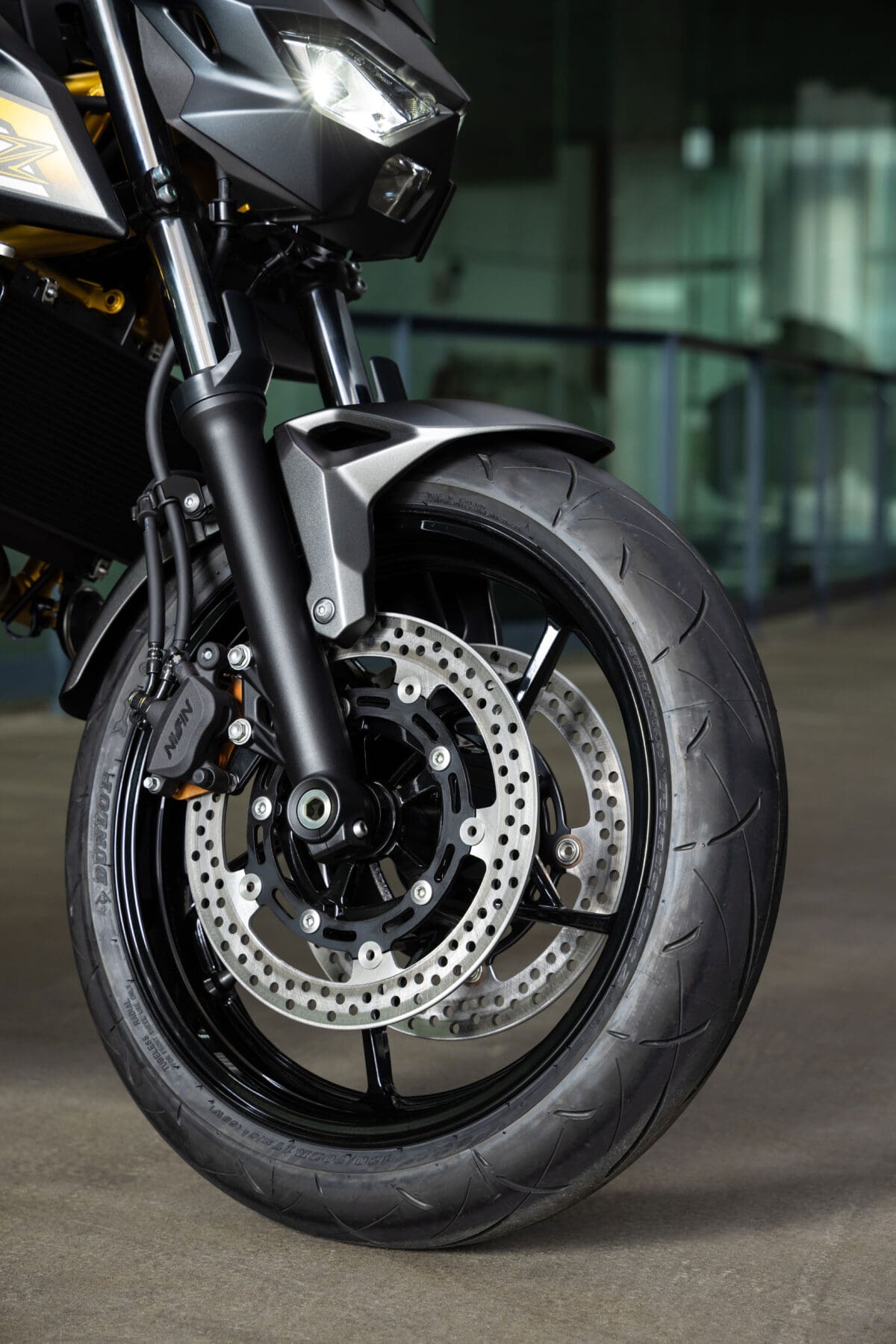
But, no matter who you are, you want good brakes on your bike, so the Z650S has got dual-piston calipers biting on to 300mm conventional discs, which Kawasaki believe give it a more modern look over the previous model’s use of wavy discs – you can be the judge of that – but they do give a good bit of stopping power for the type of riding I did. The likes of the Honda CB750 sees 4-piston radial mounted front calipers, which would arguably give a sharper bite, however I found the set-up on the Z650S to be good enough for this easy-riding model.
New for 2026 is the introduction of an ABS unit and Kawasaki’s Traction Control (or KTRC, as you might see it being referred to). This has got two levels of intervention to choose from; Mode 1 being the more sportier riding option and Mode 2 is for when intervention occurs earlier when excessive wheel spinning is detected. Or you can turn it off completely, doing so on the move at slower speeds. Being blessed with a sunny day of riding, I had the traction control system in Mode 1 and the ABS turned on to see how it performs and my findings were that the traction control definitely wants to have its say at the table. It kicked in a few times when the ride got a bit giddy and I found it to be quite intrusive so for me. I preferred riding with it off so that it didn’t hinder my flow so much out on the fun, fluid roads – but the tech was there doing its job when needed and it was great to easily have the option of changing the traction levels on the fly.
Another bit of tech I tried is the Kawasaki quickshifter; now this doesn’t come as standard and will cost you an extra £239.95, but I think it’s something that a lot of riders will choose to have because it’s so easy to use. Quickshifters generally seem to be offered as an accessory in this category of bike, unless you go for something more towards the eight grand mark, like the Triumph Trident 660 or the Suzuki GSX-8S. The Kawasaki quickshifter allows for clutchless upshifts only, and works really well in the higher gears, but I wouldn’t say it’s as refined as some other quickshifters on the market. In lower gears, especially riding through town, it can be quite jerky, so I needed to brace myself for a kick on my backside as it engaged the next gear up. Having said that, I was still grateful to have the tech, especially when overtaking and progressive riding. It was great to have the easy access to upshifts and the clutch lever is lovely and light for when I did give it a flick in the downshifts; my hand wasn’t fatiguing through the hours that I was riding either. The Z650S gets an assist and slipper clutch to support going down the box, which Kawasaki say was developed based on feedback from their racing activities, and I didn’t have any problems on my ride with the rear skipping; the unit was doing a decent job of keeping the torque to the rear wheel all under control.
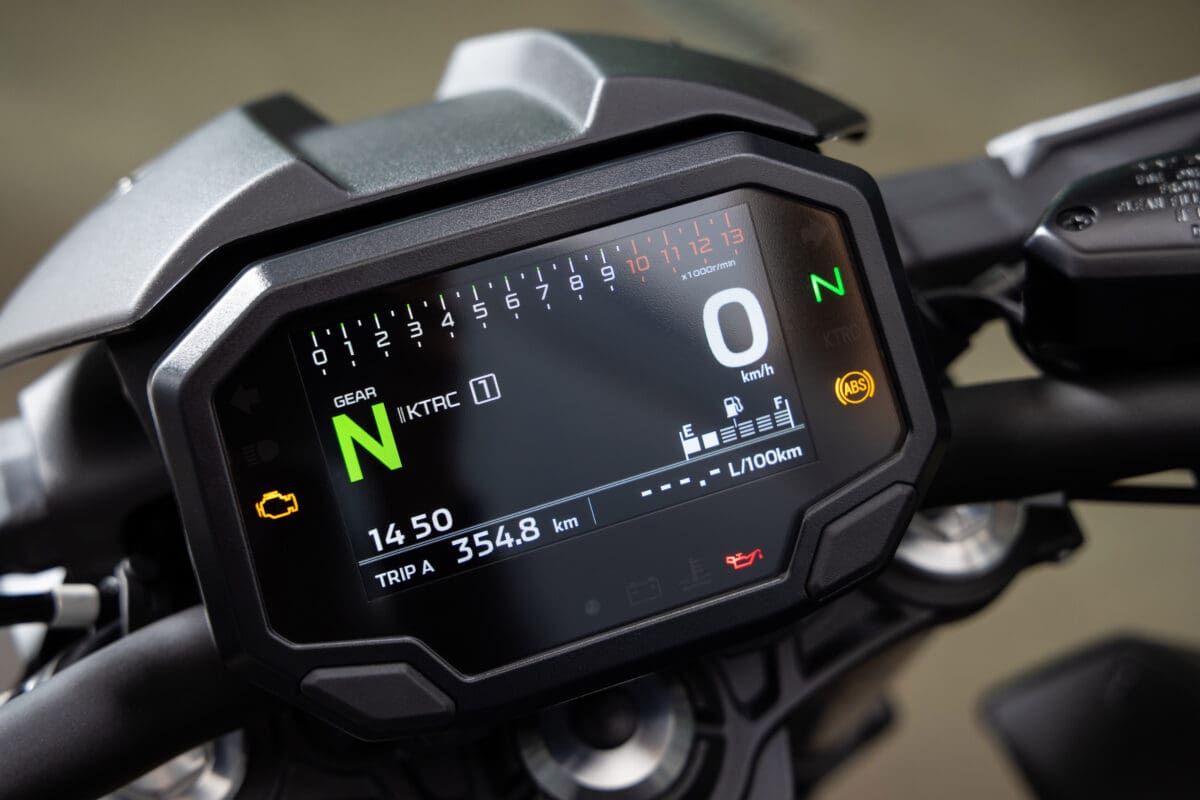
One piece of tech the Z650S gains is a new. Full-colour 4.3” TFT display, showing all the essentials clearly, such as what gear you’re in, how much fuel you have and, perhaps most importantly, your speed and revs. It doesn’t look too dissimilar to the previous model, however the way the information is displayed is slightly different – there are two different displays to choose from as well as the option of a black or white background – but it’s really easy to use and has all the information there that you need without too much clutter going on, and that’s the same for the switchgear. The buttons are very minimal on the handlebars and some features are not accessible on the move, requiring two hands to access menus in the dash, like the new smartphone connectivity feature using the Kawasaki Rideology app. I tried this out to see how easy it was to use and literally, it took 2 minutes to download the app and connect my phone via Bluetooth to the bike, just like you might do in your four-wheeled companion.
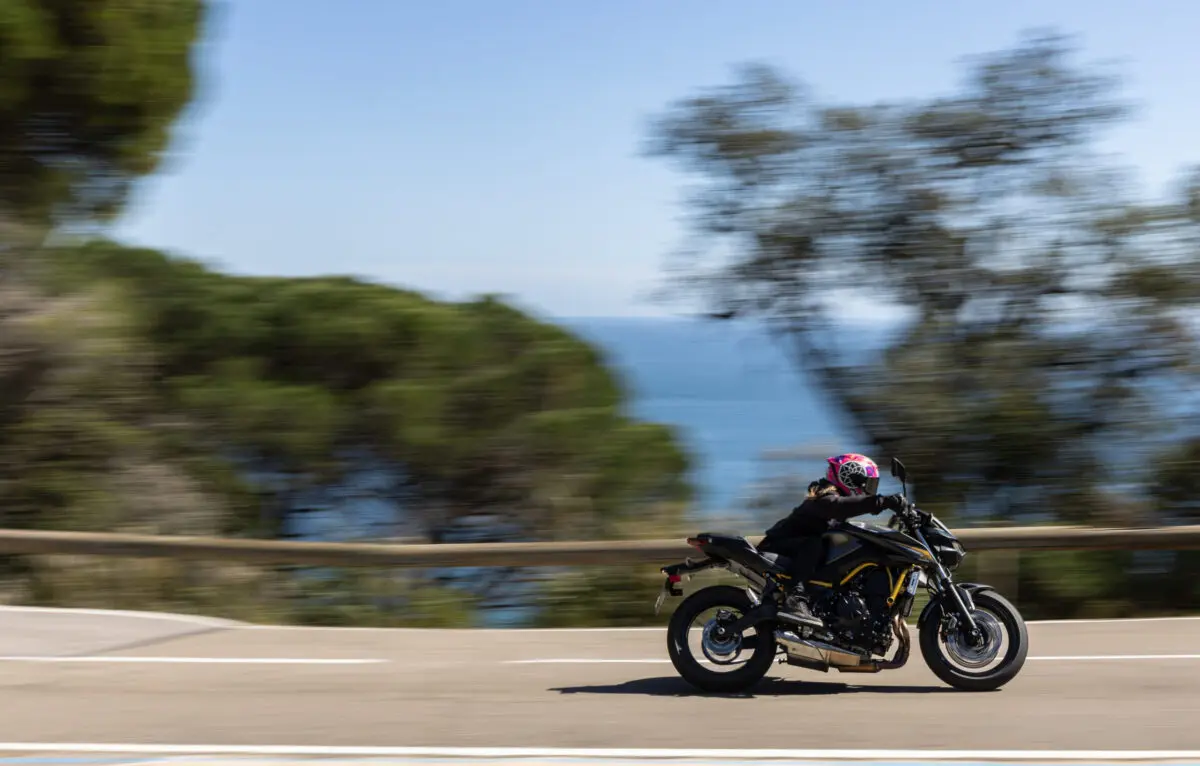
So, that’s the new tech, but the majority of the updates for 2026 are in the styling department. The first thing you’ll probably notice is that the headlight cowl is now more compact and aggressive looking over the previous Z650, with a triple LED headlight design, which again, is shared with other Z models. You might hear of Kawasaki talking about their ‘Sugomi’ approach, which is their impactful design philosophy that’s intended to get people’s attention, so to achieve that they’ve further added a new flyscreen, seat design, radiator covers, new indicator design, heel guards and a more compact tail unit. There are also several new layered shrouds around the tank area, which I think gives it a muscular look, and essentially brings it in line with the rest of Kawasaki’s Z family of bikes. The design is really well integrated, giving it a more modern and menacing look over the previous model with a feeling of, ‘I’m here to play with the big kids’, kind of vibe. And that message seemed really important to Kawasaki; to have a bike styled in a way that looks the part of a larger bike but with the practicality and user-friendly features that newer riders would want, especially as they say a large share of their buyers in this category have been aged 25 years or younger. And I have to say, I did feel like one of the cool kids riding this bike, so I can see why it would appeal to a younger demographic. Going hand-in-hand with the styling is a revised riding position and ergonomics. This new model now has a wider, fat-type handlebar that allows a slightly more forward riding position. So, the handlebar is 10mm higher, 30mm wider and 40mm further forward than the previous model, and it’s also got a wider and more cushioned seat. I was riding for several hours and it’s more than comfy enough, with that new seat proving roomy and with very little vibes. I quite like the slightly more sporty, forward riding position that matches the new looks, and I think the Z650S has got a blend that proves you can have comfort as well as hard-hitting styling.
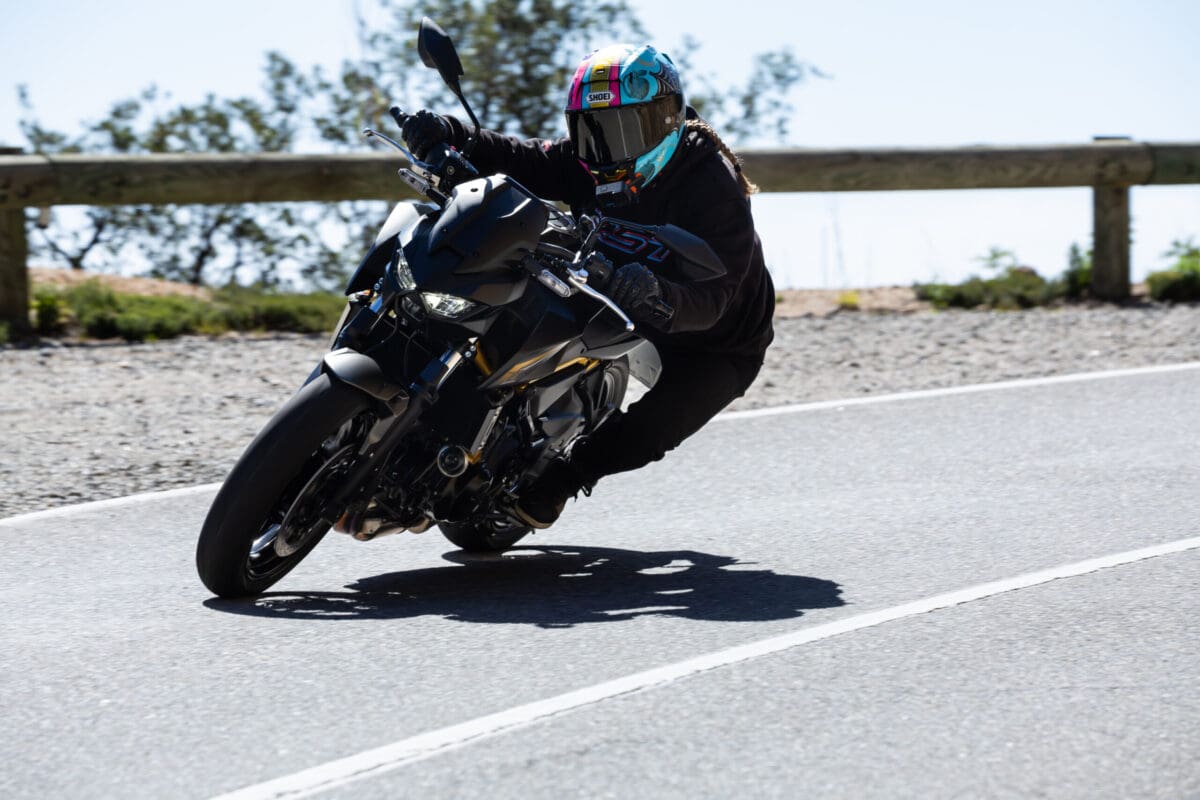
In terms of suspension, it sees the same as the previous model in that it’s still got 41mm non-adjustable front forks and horizontal back-link rear suspension, so it’s not the fanciest of set-ups and neither is there any adjustability. Again, this would be more than adequate for a newer rider that doesn’t necessarily need glitzy springs, but the stock set-up is quite soft. In my more spirited riding, when I was hard on the brakes, it tended to dive forwards slightly, which seemed more apparent with the new forward favouring riding position. I kind of got used to it and it became predictable, but being slightly further forward, it was more apparent. For everyday riding, it’s more than fine. Cruising along, it’s very plush and comfortable; I can imagine you’d easily cover a lot of miles on this thing without realising.
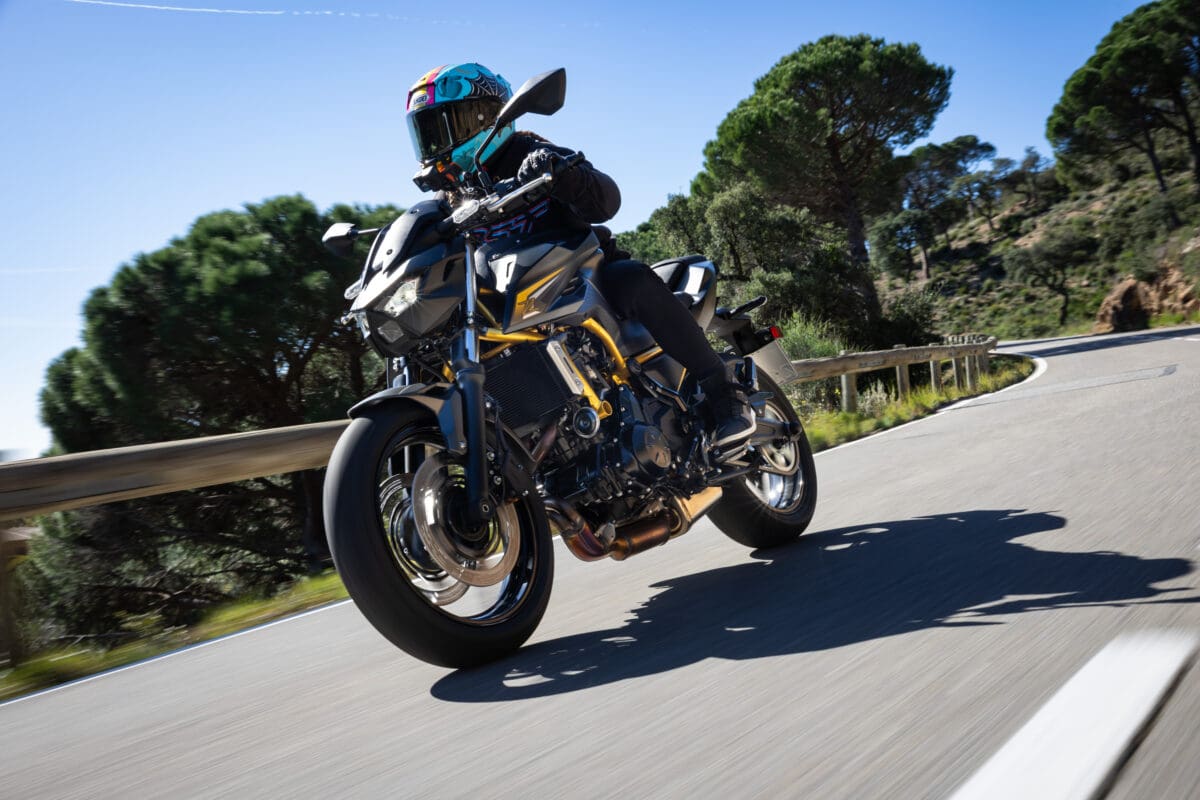
So, the Z650S is what Kawasaki are offering as their middleweight naked and I think they’ve got a good contender in a playground of fierce competition, with the likes of the Yamaha MT07 and Honda’s CB750 Hornet – and Kawasaki’s trump card is that the Z650S is a few hundred quid cheaper coming in at £7,199 as standard. However, you don’t get as much adjustability like you do on the Yamaha or as much technology as you do on the Honda, so I think it depends on what you value most as a rider. If you’re looking for something that’s going to be reliable, stylish and more wallet friendly, then the standard Z650S will certainly be that. At the other end of the spectrum, Kawasaki are offering a Performance Edition of the Z650S if you want even more sportiness from this middleweight monster, which has a full titanium Akrapovič system, a smoked flyscreen, seat cowl and tank pad, but this will cost you a chunk more at £8,599. Kawasaki say that they’ve really considered the balance between price and specification and take their responsibility of bringing new riders to the road very seriously, whilst still catering for those that want a bit more choice.
Fundamentally, with this standard version, you are getting a basic set-up because it’s aimed at newer riders and therefore has a lower price tag – but did I still have fun? Yeah. Did I feel credible when I pulled up to park? Yeah. Are there a few things I’d change? Yeah. For me, I’d really look to change the tyres. It comes fitted with Dunlop Sportmax Roadsport 2s and they’re a bit vague on the front end and a bit loose on the rear end, resulting in them being not the most confidence inspiring of rings, and that’s a shame as I think they were taking a bit of shine off the bike. So, I’d probably change those if I bought a Z650S, and also add the quickshifter… but then you’re adding a few hundred quid onto the original price. Personally, as a more experienced rider, I would’ve liked those extra bits, but Kawasaki are confident in their offering’s spec, and aren’t shy in saying that they’ve put what you need on this bike and no more; in order to keep it purse friendly and appealing to new riders. I think they’ve applied a subtle update that has a big attention-grabbing impact with the Z650S, making this a real accessible option – because at the end of the day, we need to get bums on seats, and I can see how this bike will do that. What you can certainly guarantee from the Z650S is a load of fun and flick-ability and enough fiery-ness when you need it, encouraging you to get involved with the way its power is delivered. You can easily transition from the city to the hills and be grinning at the performance – and look good whilst doing so.
Specs: Kawasaki Z650S
Engine.
Type: 649cc Parallel Twin
Bore x Stroke: 83mm x 60mm
Compression: 10.8:1
Fuelling: Electronic injection
Claimed Power: 67bhp @ 8,000rpm
Claimed Torque: 64Nm @ 6,700rpm
Electronics.
Riding Modes: No
Traction Control: Yes
ABS: Yes
Quickshifter Yes
Wheelie Control: No
Launch Control: No
Chassis.
Frame: Tubular steel trellis
Front Suspension: 41mm telescopic forks
Rear Suspension: Horizontal monoshock with preload adjustment
Front Brakes: 2 x twin-piston calipers, 300mm discs
Rear Brake: Single-piston caliper, 220mm disc
Dimensions.
Wheelbase: 1,410mm
Seat Height: 805mm
Wet Weight: 190kg
Fuel Capacity: 15 litres
INFO
Price: £7,199
From: www.kawasaki.co.uk