
British brand Spada has undergone a transformation over the past few years and now boasts some of the most stylish and desirable yet practical bike gear around. To find out what’s been going on behind the scenes, Julian Challis sat down with the designer leading the charge, James Kent.
For more than three decades, Midlands-based motorcycle clothing brand Spada has been supplying British bikers with affordable and stylish motorcycle clothing. With more than 20 years’ experience in the industry, Spada’s founder Tony Taylor saw a gap in the market for well-designed and reasonably priced riding kit.
And so, from his base in the Midlands, the heartland of UK manufacturing, he set about filling that gap. From commuting to touring, the company went on to produce a wide range of clothing that legions of bikers have relied on for decades.
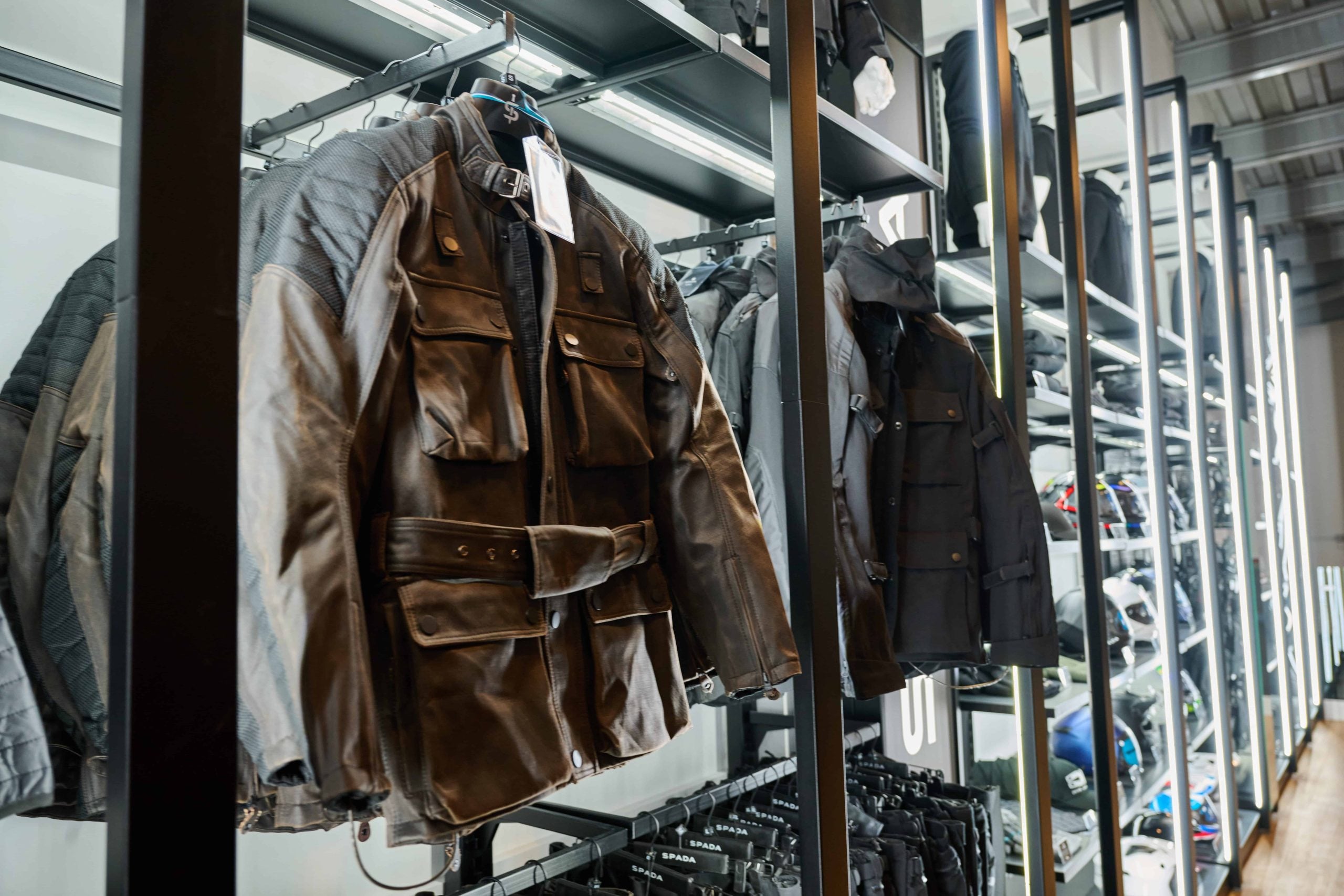
But in 2024, the 30th anniversary of the company, Spada underwent a refresh to take the company into the next three decades, and more. And much of this is down to the firm’s Production Development and Design Manager James Kent, a man whose career has literally taken him from designing bomb suits to adventure suits.
We tracked down James at Spada’s Halesowen headquarters to find out about the grand plan for Spada’s future, and how its flagship new adventure suit fits into that plan.
James’ route into designing technical clothing came almost by accident at the start of his career, with a choice that almost sounds like the set-up to a joke, but which showed both strength of character and professionalism.
“I did my degree in fashion design technology and for my first job, I was designing body armour for the Armed Forces. Ironically, at the same time, I had the choice to go to Sri Lanka and work for Victoria’s Secret or go to Rochdale and work with the Army. I thought, ‘what am I going to learn from a G-string?’”
Explosive design
So, Rochdale it was, and instead of lingerie, James found himself working on a project for the Ministry of Defence.
“We were doing improvised explosive ordnance disposal suits. Basically bomb suits. I learned so much about ergonomics and product design. We were using 60‑layer Kevlar for certain parts of the suit, so thinking how to ensure the suit worked for the user was essential.”
Crucially, the experience illustrated one point: what users say they want and what they really need aren’t always the same. It’s a lesson that James has used throughout his career and one that he still leans on when he’s designing motorcycle gear today.
After his stint with military clothing, James moved into more conventional areas of fashion design, working with the fine tailoring company Alexon, as well as the likes of Fat Face, Jack Wills, and Superdry, before transitioning to the motorcycle industry, initially with Ruroc.
But despite his new appreciation for the motorcycle world, when Anna Taylor, the daughter of Spada’s founder approached James about joining the team in 2022, he was initially reluctant.
However, when she outlined her vision to make Spada into a brand that could as easily be stocked in Selfridges as in a motorcycle shop, he accepted the challenge. While the company had a great range of products, James explained that Spada’s response to the changing market had been more reactive than proactive, following market trends rather than setting its own path. James was keen to change that approach.
“I’m not a competitive person,” he says. “So, if someone makes a product and I can’t better it, or give it a new angle, I’d say we don’t do it. There’s no point. We had to think, ‘what is our main focus?’ And of course, the main focus is the rider.”
So rather than starting with price points and competitors’ product ranges, James looked to strip back Spada’s thinking to who the product is for, why would they wear it, and what are they doing while they are wearing it? These were classic tenets that he’d learned from those days with the Armed Forces.
Three pillars
From this, Spada identified and developed three main pillars of its product ranges: City, the more road and commuter-related products. Urban, the lifestyle and off-bike-friendly kit, and finally, Explore, the touring and adventure products.
James says: “The adventure sector needed so much more consideration. It’s an intimidating market to get involved with. In fact, over recent years, it’s probably the most saturated area of the motorcycle market.”
Although Spada already had two adventure suits in its line-up, the Ascent and Crossguard, to really move Spada forward, the innovative designer was wary of just throwing yet another generic laminated suit into an already crowded marketplace.
“We’d be ignorant if not naive just to think that the Spada name would sell the product. We had to find a niche.”
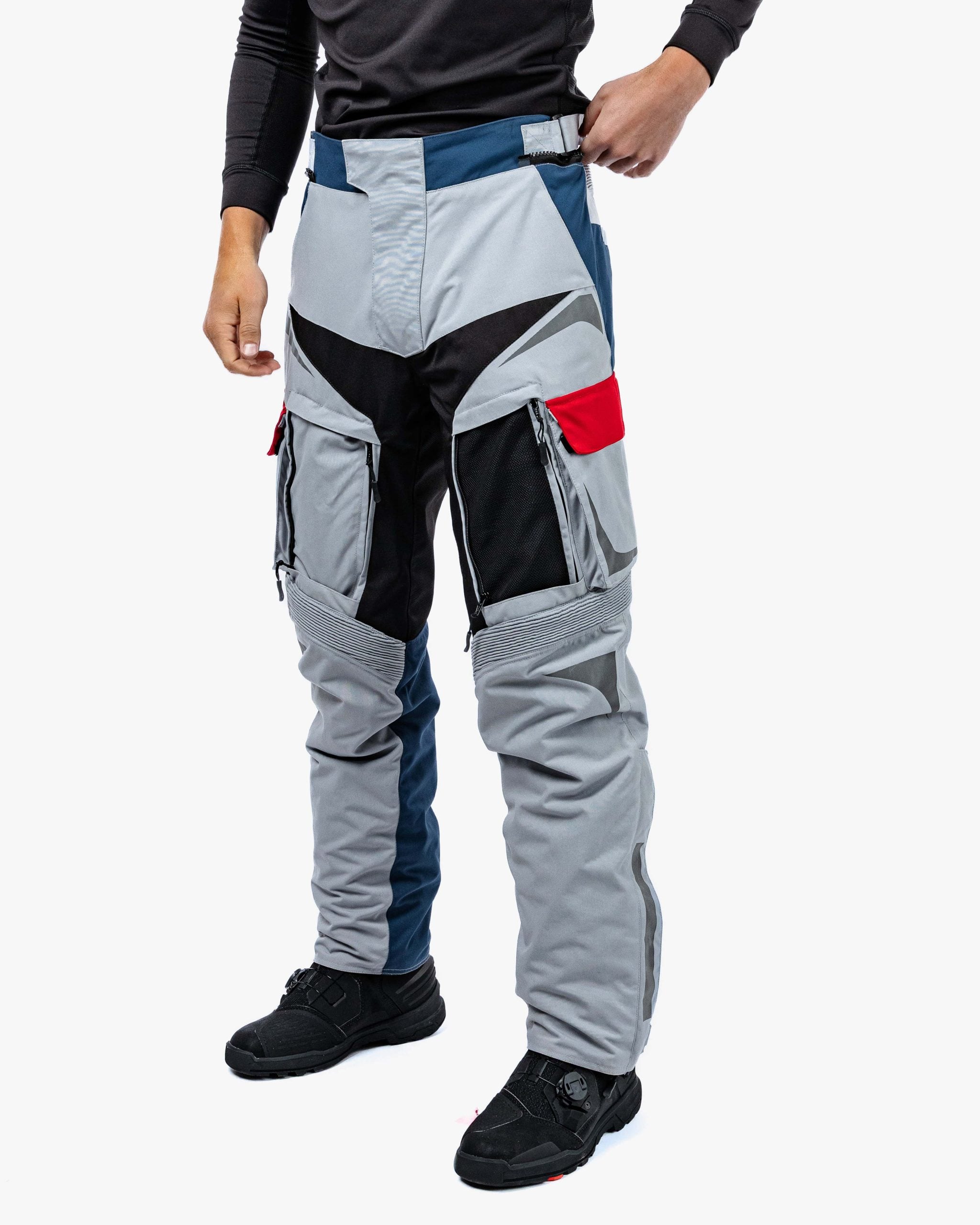
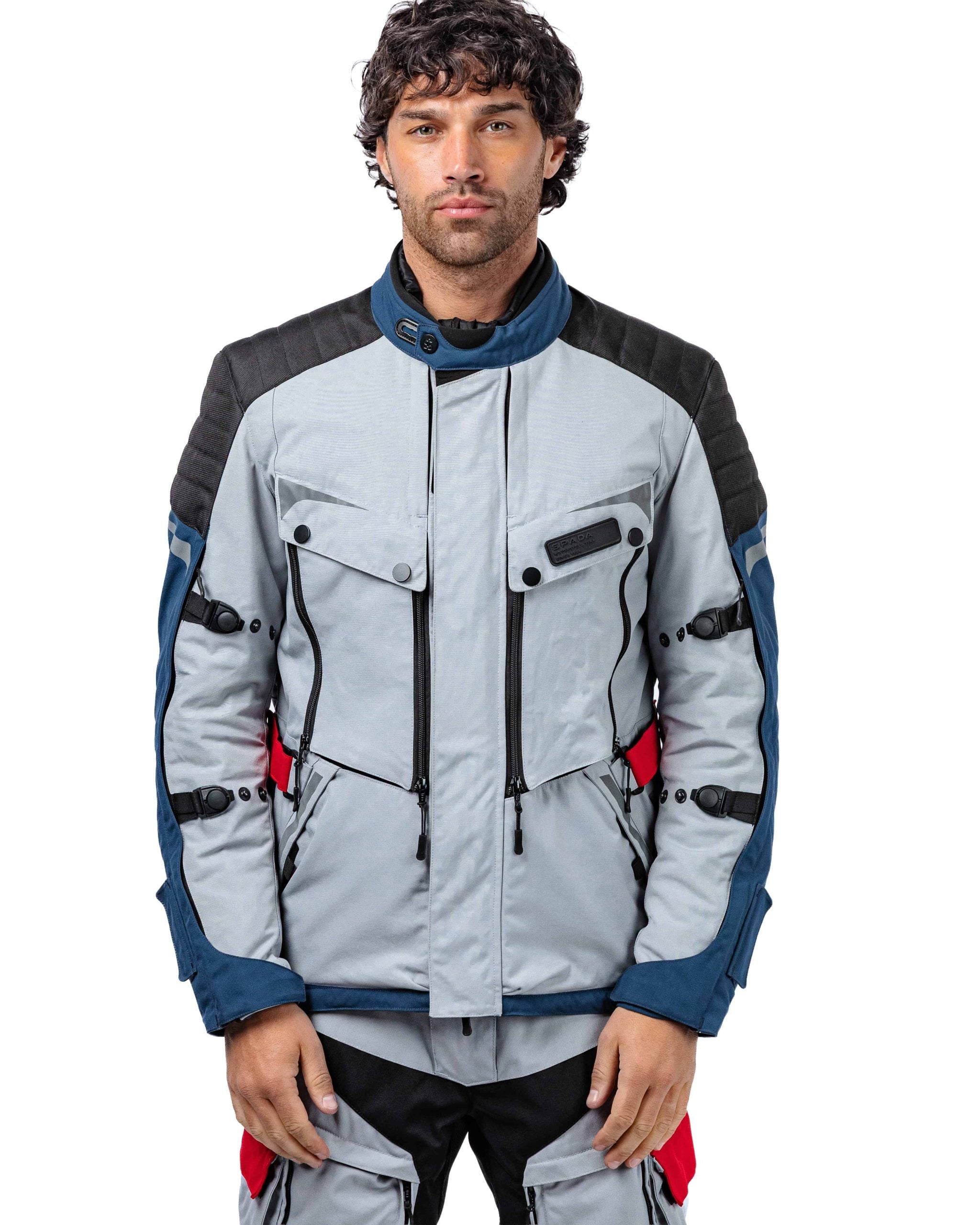
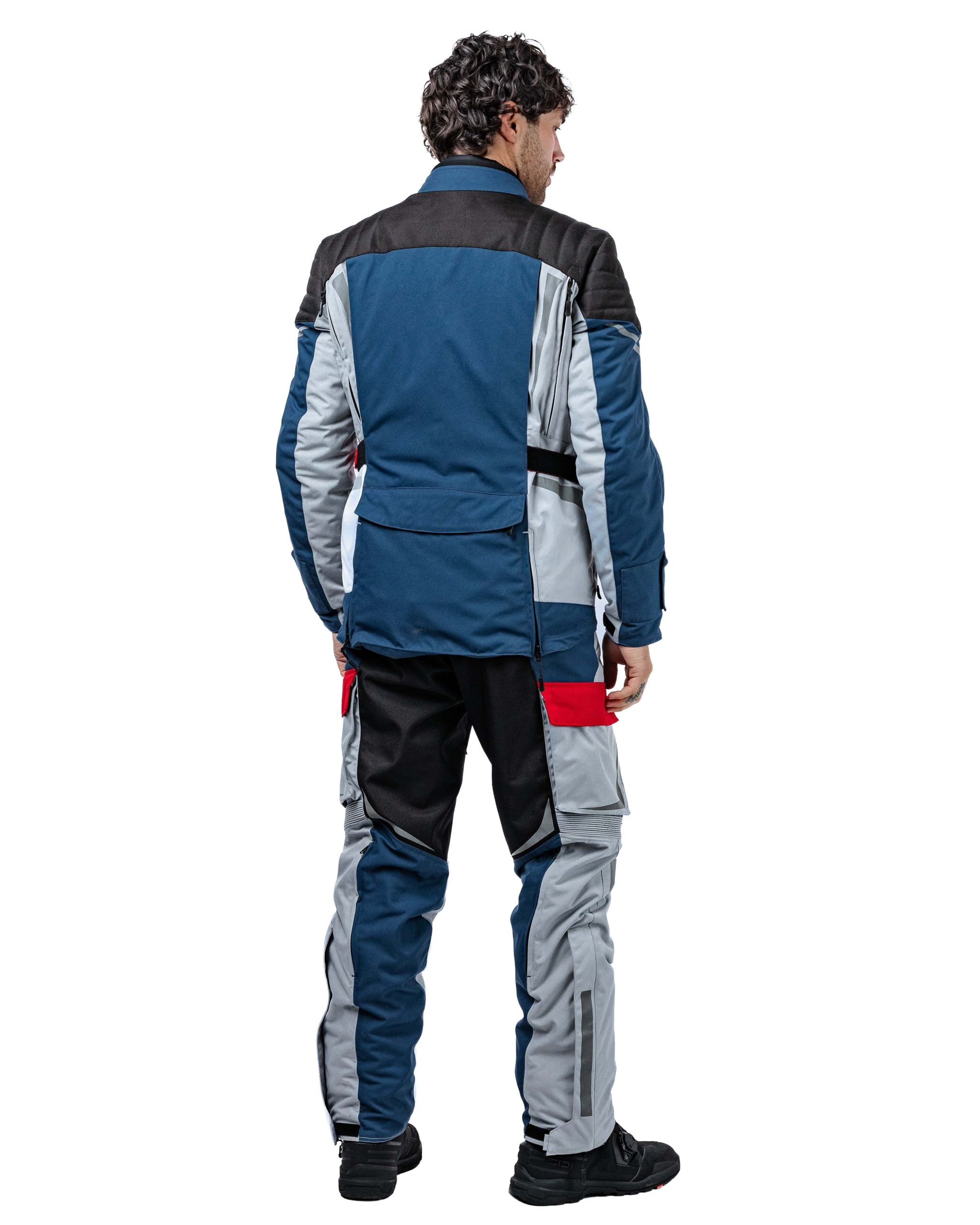
And that niche was the Vanguard Adventure suit, a product that is happy to question the rules of what an adventure suit needed to be, just like its creator.
“On the market already, you’ve got tri‑laminate shells, zip‑in thermals, zip‑in waterproofs. By the time you’ve clipped and zipped everything in, it takes you about half an hour. And while the manufacturers have put all the ergonomic features into the outer shell (like action panels, accordion elastic), once you zip in your liners, those mean nothing.
“You’ve restricted all the engineering you’ve put into the outer. If it’s clipped into the sleeve, it’s going to pull back any articulation you have built in and it’s so much harder to wear.”
James also questioned the faith many riders place in laminated membranes.
“Whenever you use a waterproof fabric, you’re already compromising on breathability. And when you’re out on the bike, you don’t need all the protection for every element all the time. As the saying goes, a jack of all trades is a master of none.”
Rider protection
The Vanguard abandons attempts to do everything at the same time. Instead, it places breathability and rider protection as the core of the suit and treats warmth and waterproofing as modular extras that can be added to the suit as and when required. So, at the heart of the adventure suit is the outer layer, which is deliberately not a heavy fully-laminated shell, and there is a separate waterproof layer that is worn under this.
“We’ve gone for a non‑laminated fabric. It’s DWR‑coated (durable water resistant) to shed showers, but I’ve kept it unlaminated to help with flexibility and breathability. You can layer up to keep warm and dry, but you can’t layer down to get cool without compromising protection. So, the one layer you have on all the time has to be the one that’s protective.”
“If you go out for a walk in the mountains, you wear a base layer, a mid-layer, a jacket, all independent and modular. So, the thinking was, let’s try that modularity on a bike. When you don’t need the thermal or waterproof, it’s not half attached and annoying, you just don’t wear it.”
And while Spada’s accompanying branded thermal layers are intentionally light and easily packable, James is equally happy for a rider to use and wear their existing kit.
“We sell the Gambeson thermal liners designed to go under the Vanguard jacket, but you’ve probably got one from Rab or Patagonia. We say just wear that. Use what you’ve got at home. We don’t want people to spend needlessly. And this way, you’ve got a jacket to wear when you reach your destination.” But it’s not just layers that the Spada team has focused on.
“I was picking up some jackets and they’ve got these big vents, then someone has put the waterproof inside pocket over the vent. That’s where they’ve gone wrong. The way you’re scrunched up on the bike, breathability across the top of your body is key. So, we’ve put the waterproof pockets down low and kept that chest area free to really move the air.”
CE RATED
Both the Vanguard jacket and trousers use CE-rated level-2 protection to offer full protection. And James worked closely with the suppliers to develop a neutral and unbulky profile that didn’t unduly influence the outer profile of the jacket.
If you strip away the technical detail, what the Vanguard really represents is a statement about how Spada wants to progress for the next 30 years and beyond. It’s not just another adventure jacket to add to the already crowded market. It’s a carefully designed product that represents an intentional shift for the Midlands-based firm from reactive to proactive product development.
It has helped move Spada’s focus away from not just what sells, but to asking why a product exists, and can it be made any better. Most of all, it has shifted the focus from price-led to design and quality-led.
“The ultimate utopia is that you can get on your bike and practically feel like you’re not wearing anything. You want to focus on the ride, not your kit. If I’ve done my job right with the Vanguard and the new range, you won’t really think about them at all. You’ll just notice the ride.”
That’s something we are happy to get on board with. You can check out Spada’s range at www.spadaclothing.com.